


Snaps, rivets, eyelets for leatherette projects
Updated Jun 2026TL;DR: PU leatherette uses the same hardware as real leather: snaps, rivets, eyelets, magnetic clasps, screwposts. Laser cutting gives you precise holes in exact positions, which makes installation faster and the finished piece more consistent than punching by hand. This article covers each hardware family, the sizes you need, and the tools to install them.
Why hardware matters
Leatherette projects without hardware feel unfinished. A bookmark is just a strip of plastic until you add a snap, an eyelet for a tassel, or a magnetic closure. Hardware turns a flat shape into a product.
The good news for laser-craft makers: every piece of hardware that works on real leather also works on PU leatherette. Snaps, rivets, eyelets, buckles, magnetic clasps, screwposts, chicago screws. The hardware industry developed all of these for leather and they translate directly.
The better news: laser cutting puts the holes exactly where they need to go. Hand-punched holes on hand-cut leather are slow and inconsistent. Laser-cut holes on machine-cut leatherette are instant and identical. This is the single biggest production advantage that laser-craft makers have over traditional leatherworkers for hardware-heavy products.
Snaps
Snaps are the most common closure hardware for leatherette projects: wallets, hat bands, bag closures, watch straps.
Sizing system. Snap sizes are called "line" sizes. Common ones:
- Line 16 (8 mm cap): small projects, jewellery, fine work.
- Line 20 (10 mm cap): standard for wallets, keychains, light closures.
- Line 24 (12 mm cap): bag closures, hat bands, anywhere you want a substantial visual.
- Line 30 (15 mm cap): heavy bags, jackets, statement closures.
For most no-stitch wallets and bag closures, line 20 or line 24 is the right answer.
Two types.
- Ring spring snaps (also called "Western snaps"). The standard. A spring-loaded ring inside the cap holds the stud. Durable, reliable, the right default.
- Magnetic snaps. Two halves with rare-earth magnets. Easier to close (no aim required), but the magnetic field can damage credit cards if placed too close. Avoid in wallet closures.
Hole size. Snap holes typically need to be 4 to 5 mm in diameter for line 20 and line 24 snaps. Laser-cut to the snap manufacturer's spec; rough hand-punched holes work but look messy.
Installation tools.
- Snap setter ($5 to $15). A two-piece die set for use with a hammer. Affordable, fine for occasional use.
- Snap pliers ($20 to $40). Plier-style tool with interchangeable dies for different snap sizes. Faster and cleaner than the setter, the right choice for production.
- Bench press ($60 to $200). Heavy-duty production tool. Worth it once you are setting 50+ snaps per week.
Rivets
Rivets are decorative and structural fasteners with no closure function. They hold layers of leatherette together permanently.
Sizing. Rivets are sized by the post length, not the cap diameter. Common posts:
- 6 mm post: for joining two layers of 0.8 to 1.0 mm leatherette.
- 8 mm post: for joining two layers of 1.0 to 1.4 mm leatherette, or three thinner layers.
- 10 mm post: for thicker stacks (three or more layers of 1.0 mm, or two layers of 1.4 mm).
The post should extend through the stack with 1.5 to 2 mm of length to spare for setting.
Cap diameters. 7 mm, 9 mm, 11 mm caps are typical. Pick by visual size; the post length controls the function.
Hole size. Rivet holes match the post diameter, typically 2 mm to 4 mm. Laser-cut precisely.
Installation. Same setter or pliers as snaps, with rivet-specific dies. Some snap pliers come with rivet dies in the same set.
When to use rivets vs snaps: Rivets are permanent and structural. Use them where you would otherwise stitch or glue, and where a small visible cap is part of the design. Snaps are removable and used for closures.
Eyelets and grommets
Eyelets are reinforced holes. They protect leatherette from tearing where a strap, cord, or lace passes through.
Sizing. Eyelet inner diameter:
- 4 mm: for thin cords, leather laces, jewellery findings.
- 5 mm: for shoelaces, standard project cords.
- 8 mm: for ribbon, wide laces, bag drawstrings.
- 12 mm: for grommets in bags, larger drawstrings.
Grommets vs eyelets. Eyelets are smaller and have a thinner flange. Grommets are larger, with a thicker washer-style flange on the back side. For thin leatherette (0.6 to 1.0 mm), eyelets are usually enough. For 1.2 mm and thicker, grommets give a more reliable bond.
Hole size. Match the inner diameter of the eyelet exactly. Laser-cut.
Installation. Same setters as snaps. Eyelet dies are flat anvils that flare the eyelet's back collar against the back of the leatherette.
Application: Lacing eyelets on bag closures, tassel eyelets on bookmarks, drawstring eyelets on pouches, decorative eyelet rows on belts and bands.
Magnetic clasps
Decorative magnetic closures for bag flaps and wallet covers.
Two halves. A male half (with a stud) and a female half (with a magnet). The two halves snap closed under magnetic attraction.
Sizing. Most magnetic clasps for leatherette use 14 mm or 18 mm cap diameters. Larger sizes for heavier flaps.
Mounting. Each half has two small prongs on the back. The prongs pass through small slits in the leatherette and fold flat on the back side, holding the clasp in place. No setter needed; a small flat-blade screwdriver or your fingers will do.
Hole pattern. Two parallel slits about 3 mm long, spaced 12 to 16 mm apart. Easy to laser cut precisely.
When to use magnetic vs snap: Magnetic clasps look cleaner on the visible face (no snap cap showing through). Snaps have a more secure positive close. For bag flaps that need to look polished, magnetic. For wallets and small closures where security matters, snap.
Chicago screws and screwposts
Removable two-piece screw fasteners. A male post with a head, a female cap that screws onto the post.
Sizing. Post lengths 4 mm to 25 mm. Pick to match the thickness of the leatherette stack you are joining.
When to use. Removable hardware: belt buckles you can change, replaceable straps, repairable parts. Also for decorative purposes; the visible head and cap can be brass, antique copper, or other finishes for a leather-craft look.
Hole size. Match the screwpost diameter. Typically 3 to 5 mm.
Installation. No tools needed. Pass the post through, screw the cap on, hand-tighten. A drop of thread-locker on the threads keeps it from loosening over time.
D-rings, O-rings, swivel hooks
Not fasteners, but worth covering because every bag, strap, and keychain project uses one or more.
D-rings. D-shaped metal rings used as attachment points for straps, handles, and clip-on accessories. Sized by inside width: 12 mm to 50 mm.
O-rings. Round metal rings, same usage as D-rings but symmetrical.
Swivel hooks (also "lobster clasps"). Spring-loaded clips that attach to a D-ring or O-ring. Used on keychain ends, bag handle ends.
Attachment. Pass a leatherette strap through the ring, fold over, secure with a rivet or stitched bar. Laser-cut a 30 by 80 mm tab with two rivet holes for a clean attachment.
Hardware sources
For Canadian buyers:
- Specialty leather-craft suppliers carry the full range: snaps, rivets, eyelets, screwposts, D-rings, decorative hardware. Look for a supplier that specifies hole-size compatibility on listings.
- Local fabric and craft stores stock basic snaps and eyelets at smaller quantities, sometimes at a premium.
- Online bulk packs are cheapest per unit but quality varies; test a sample before relying on for production.
When sourcing in bulk, buy 25 percent more than you think you need. Hardware gets lost, damaged, or rejected at install rate of 5 to 10 percent.
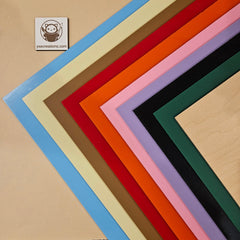
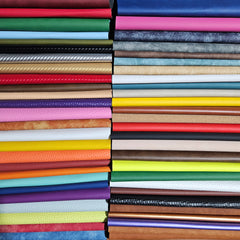
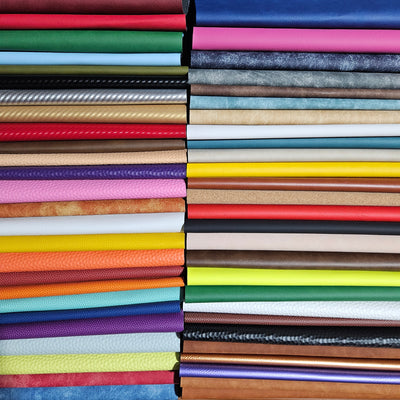
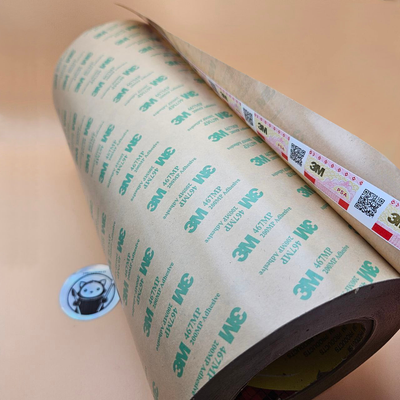
For leatherette and 3M tape to assemble alongside the hardware, see our leatherette collection and 3M tape collection.
Pre-cutting holes vs punching after
The traditional leatherworker punches holes after assembly. The laser-craft maker cuts holes during the laser pass. Three reasons to use laser pre-cut holes:
Precision. A snap hole that is 0.5 mm off centre gives a snap that is visibly off centre. Punched holes are 0.5 to 1 mm off centre routinely; laser-cut holes are dead on every time.
Consistency across units. Twenty wallets each with snap holes at exactly the same coordinates means the assembled wallets look identical. Hand-punched wallets vary unit to unit.
Speed. Punching after cutting is a second handling step. Laser-cutting the hole during the cut is free time.
The trade-off: laser-cut holes are slightly cleaner-edged than punched holes. For most hardware this does not matter. For decorative hardware where the hole edge shows, punched can sometimes look better.
Frequently asked questions
Q: Can I use leather-grade snaps on PU leatherette? A: Yes. The hardware does not know what material it is set into. The only difference is that thinner leatherette (under 0.8 mm) may not hold snap caps reliably; for those projects use thicker material at the snap position.
Q: What size snap is on most retail wallets? A: Line 20 (10 mm cap) for slim wallets, line 24 (12 mm cap) for larger or bag-style.
Q: My snaps keep popping open when the wallet is full. Help. A: Either the snap is too small for the load, or it is misaligned. Try a larger snap (line 24 instead of line 20), or add a second snap below the first.
Q: How do I install hardware without a snap setter? A: For occasional use, a wooden dowel and a small hammer can set most line 20 hardware. The setter ($10) is the right investment if you do more than five units.
Q: Where do I source colour-matched snaps? A: Specialty leather-craft suppliers stock gold, antique brass, silver, gunmetal, and black in most snap sizes. Premium import lines offer 10+ finishes including rose gold and copper. Check finish consistency on a sample before ordering bulk.
Q: Can I engrave a brass snap cap with my laser? A: With a fiber laser, yes (brass marks beautifully). With a CO2 laser, no (CO2 does not mark unfinished brass). With a CO2 laser on an anodised or coated brass snap, yes. Test on a sample.