
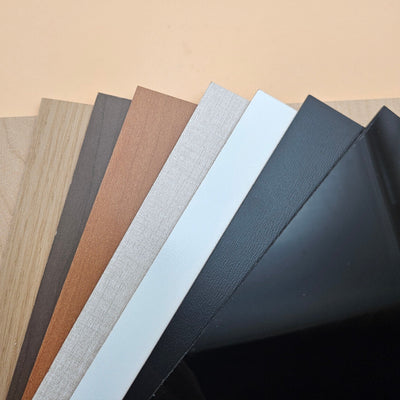


PU leatherette thickness guide: which mm for which project
Updated Jun 2026TL;DR: PU leatherette is sold in thicknesses from about 0.5 to 1.4 mm. Each thickness suits a specific use. 0.6 to 0.8 mm is for bookmarks, tags, and detail work. 1.0 mm is the most versatile default. 1.2 to 1.4 mm is for structural pieces like bag bases. This guide tells you what to buy for which project, with cut and bonding behaviour for each.
Why thickness matters
Leatherette is not like fabric, where thickness is mostly about drape. Leatherette thickness changes three things at once.
Mechanical feel. A 0.6 mm bookmark folds in your fingers. A 1.4 mm bag base holds its shape under loaded yarn. The same design at two thicknesses feels like two different products.
Cut behaviour. Thinner leatherette cuts faster, with less char, and with a kerf so small you barely see it. Thicker leatherette needs more power, more time, and shows a slight bevel on the cut edge.
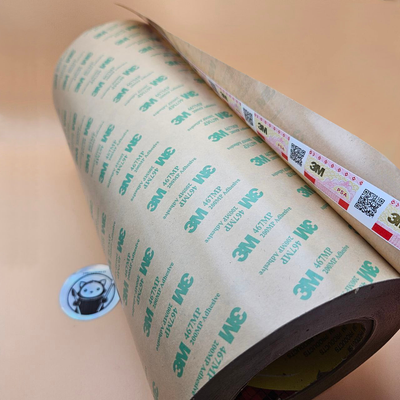
Bonding behaviour. All our leatherette thicknesses ship with TPU melt-adhesive backing, so iron-on is the default workflow regardless of thickness. For non-iron use cases, thinner pieces bond cleanly with 3M tape, and thicker pieces bond better with E6000 or contact cement because the deeper edge gives more surface area.
Pick the thinnest thickness that does the structural job. Anything thicker than necessary wastes material and slows cuts.

0.6 mm PU leatherette
Best for: bookmarks, gift tags, fine-detail engraves, layered ornaments, jewellery accents, faux-leather appliqué.
Hand feel: Pliable, drapes easily. Folds like cardstock, not fabric. Will not hold a creased shape unless pressed for hours.
Cut behaviour: Fast. A 40 W CO2 cuts at 200 to 400 mm/s with 12 to 18 percent power. Low char even on dark colours. Air assist on the low end (10 to 15 psi) is enough.
Engrave behaviour: Engraves cleanly but the substrate is thin, so deep engraves can go through to the backing. Keep engrave depth shallow.
Bonding: Iron-on TPU (built in) works beautifully on fabric substrates. For rigid substrates at this thickness, 3M tape is cleaner than E6000 because the glue bead width can exceed the part width.
What to watch for: Backing variation. The fabric or felt backing on the reverse can be a meaningful fraction of total thickness at 0.6 mm. Always order from a supplier who specifies whether the 0.6 mm is total or face only.
0.8 mm PU leatherette
Best for: hat patches, keychain blanks, small tags, backpack tags, business-card-sized name tags, earrings.
Hand feel: Substantial but still flexible. Good balance of bend without being floppy.
Cut behaviour: Cuts cleanly on any CO2 laser. 150 to 300 mm/s with 15 to 22 percent power on a 40 W CO2. A 20 W diode handles 0.8 mm in 1 to 2 passes for coloured leatherette. Edges are crisp with no visible bevel at this thickness.
Engrave behaviour: The most forgiving thickness for engraving. Surface marks well, the backing stays intact, and contrast is high on darker colours.
Bonding: This is the sweet spot for hat patches because the TPU iron-on backing has enough leatherette mass to spread heat evenly during pressing. Patches stay flat under wash cycles.
What to watch for: Stretch on long pieces. A 30 cm 0.8 mm strip stretches a millimetre or two if pulled. Mind the grain direction when cutting strips.
1.0 mm PU leatherette
Best for: standard keychain blanks, no-stitch wallets, foldable bookmarks, larger name tags, layered art middle layers, snap-and-rivet pieces.
Hand feel: Substantial. Holds its shape under light handling. The "premium" feel that many crafters and customers prefer.
Cut behaviour: Slightly slower than 0.8 mm. 100 to 250 mm/s with 18 to 25 percent power on a 40 W CO2. Char is minimal. Air assist 15 to 25 psi.
Engrave behaviour: Marks very well with high contrast. The thicker face gives more depth for engraves without breaking through to the backing.
Bonding: Versatile across all methods. TPU iron-on for fabric, 3M tape for rigid substrates, E6000 for spot bonds, contact cement for lamination.
The default thickness. If you are unsure what to order for general leatherette work, 1.0 mm is the right call 60 percent of the time.
1.2 mm PU leatherette
Best for: bag bases, premium tags, sturdier wallet pieces, snap-back hat brims, structural lamination layers.
Hand feel: Firm. Holds its shape under loaded use. The piece feels like a finished product.
Cut behaviour: Noticeably slower than 1.0 mm. 80 to 150 mm/s with 25 to 35 percent power on a 40 W CO2. Some bevel begins to show on the cut edge but only under raking light. Air assist 20 to 30 psi.
Engrave behaviour: Same as 1.0 mm at the surface. Deeper engraves possible without backing concerns.
Bonding: E6000 and contact cement are stronger choices than tape at this thickness for load-bearing applications. 3M tape still works for non-loaded laminations.
What to watch for: Punch-through on holes. Snap and rivet holes need a sharp punch or a laser-cut hole; pressed holes in 1.2 mm tend to crack the surface.
1.4 mm PU leatherette
Best for: weight-bearing bag bases, structural mat pieces, base layers in stacked products, premium-feel signage backing.
Hand feel: Heavy and rigid. Closer to leather board than fabric. Will not flex without serious force.
Cut behaviour: Slower still. 60 to 120 mm/s with 30 to 45 percent power on a 40 W CO2. Visible bevel on the edge. Multiple passes can give a cleaner edge than one slow pass. Air assist 25 to 35 psi.
Engrave behaviour: Engraves with the same surface behaviour as the thinner thicknesses, but the thicker substrate handles deeper engraves and patterned reliefs without warping.
Bonding: E6000 or contact cement are the right choices. The edge gives meaningful bond surface area. Solvent cement (E6000) is recommended for bag bases because the bond stays slightly flexible under load.
What to watch for: Curling at the edges during cutting if the air assist is high and the piece is small. Tab the corners to a sacrificial backing if pieces are walking around the bed.
Choosing thickness by project
- Bookmarks — 0.6 to 0.8 mm. Folds cleanly, light in a book, easy to fold-finish.
- Gift tags — 0.6 to 1.0 mm. Cardstock-like feel, takes engrave well.
- Hat patches — 0.8 mm. Sweet spot for TPU iron-on bond strength and wash durability.
- Keychain blanks — 0.8 to 1.0 mm. Substantial in hand, survives daily key wear.
- Backpack tags — 0.8 to 1.0 mm. Flexes under pack movement, does not crack.
- No-stitch wallets — 1.0 to 1.2 mm. Premium feel, holds shape, accepts snap hardware.
- Bag bases, light yarn — 1.0 to 1.2 mm. Supports knit and crochet projects without sagging.
- Bag bases, heavy yarn — 1.2 to 1.4 mm. Holds shape under loaded bag weight.
- Earrings — 0.6 to 0.8 mm. Lightweight on the ear, holds detail.
- Layered art accents — 0.6 mm. Thin enough to layer multiple times.
Backed vs unbacked leatherette
Most PU leatherette has a fabric or felt backing on the reverse. This affects total thickness, cut behaviour, and bonding.
Backed leatherette. Face is the PU layer, back is a thin fabric or felt. The total thickness includes both. Cuts at slightly different settings on each side, so a recipe tuned for the face alone may leave the backing partially attached. Drop speed 20 to 30 percent compared to face-only specs.
Unbacked leatherette. Pure PU all the way through. Cuts uniformly. Less common in retail but available from specialty suppliers.
For laser work, both are fine. Backed is more common and bonds better on the back side with most adhesives. Unbacked is thinner for the same nominal mm and engraves more uniformly.
Buying tips
- Order one thickness up from what you think you need for structural pieces. Customers consistently rate the thicker version as "premium" in feedback.
- For bookmark and tag work, the 0.6 to 0.8 mm range is hard to source consistently. Build a relationship with a supplier who stocks it reliably.
- Sample packs are worth the extra money on first orders. Five-thickness packs let you calibrate by feel before committing to bulk.
- Backed leatherette ships flat. Unbacked may curl on the roll; warm-storage your unbacked stock to relax it before cutting.
Frequently asked questions
Q: My 1.0 mm leatherette feels different between two suppliers. Why? A: PU thickness tolerance varies by manufacturer. A nominal 1.0 mm sheet can measure 0.85 to 1.1 mm. The face thickness and the backing thickness also vary independently. For tight-tolerance work, measure each shipment.
Q: Can I cut 2 mm PU leatherette? A: Yes, with adjusted settings and patience, but most "leatherette" thicker than 1.4 mm is sold as leather board or fibreboard-backed material. Confirm the polymer with the supplier before cutting.
Q: Why does my 0.6 mm engrave go through to the backing? A: Engrave power is too high or speed too low. Drop engrave power by 30 to 50 percent and lift the design slightly above the surface (engrave above focus) for a softer mark.
Q: How do I know if a listing is backed or unbacked? A: Most laser-supply listings specify. Generic fabric-store listings rarely do. The back of backed PU is fabric or felt; unbacked PU has the same PU texture on both faces.
Q: Does thickness affect engraving contrast? A: Slightly. Thicker PU has more dye depth, so engraves can read sharper. But the engrave only removes a few microns of the face, so most of the contrast difference comes from colour and finish, not thickness. See our leatherette colour and engraving contrast guide for the full breakdown.
Q: Is 1.2 mm leatherette laser-cuttable on a 5 W diode? A: With multiple passes, yes, but the char is heavy and cut times are long. For 1.2 mm and up, a 20 W diode or a 40 W CO2 is much more practical.