


PU vs PVC leatherette: which to laser cut
Updated Jun 2026TL;DR: PU (polyurethane) and PVC (polyvinyl chloride) are both sold under names like faux leather, vegan leather, and pleather, but they are different polymers with very different laser-cutting behaviour. PU laser cuts cleanly and is what we stock. PVC releases chlorine gas under laser heat, which corrodes machines and is harmful to inhale. Always confirm the polymer before cutting.
Two materials, one shelf
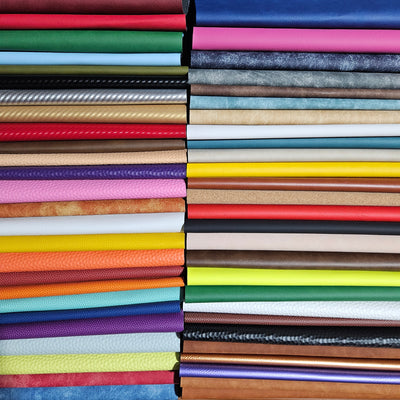
Walk into a fabric store and ask for "faux leather" and you will be handed a stack of swatches that look identical. Most retailers do not call out the underlying polymer because, for sewing and upholstery, it does not really matter. For laser cutting, it changes everything.
The two polymers you will encounter:
PU (polyurethane) leatherette. Soft, flexible, breathable. The current standard for laser-friendly faux leather. Cuts cleanly with a small kerf, edges that do not stretch or curl, and fumes that need extraction (like every other laser cut) but are not actively dangerous.
PVC (polyvinyl chloride) leatherette. Stiffer, glossier, often cheaper. The older standard, still widely sold, especially in upholstery and bag-making circles. Cannot be lasered. Releases chlorine gas under laser heat, which combines with moisture to produce hydrochloric acid. The acid damages laser optics, rails, and tube. Inhaled, the gas is harmful to lungs.
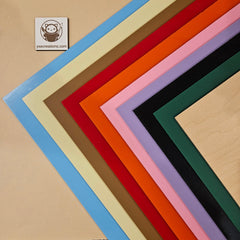
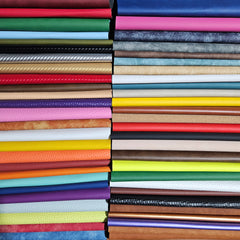
The two materials look almost identical until you cut them.

Why this matters
There are two reasons to care about the difference.
Safety. Chlorine gas and hydrochloric acid are not theoretical risks. Even small PVC cuts deposit acidic residue inside the laser cabinet and on the lens. Repeated exposure damages the machine over months and is harmful to the operator over years. The damage is cumulative and quiet, which is why people convince themselves it is fine until it is not.
Cut quality. Even setting safety aside, PVC laser cuts poorly. The cut edge melts and shrinks, the kerf is uneven, and the fumes condense back onto the surface of the material. You cannot produce a clean, professional-looking piece from PVC leatherette under any laser. PU exists specifically because the laser-craft and signage industries needed a faux leather that would behave under a laser.
If a faux leather is not explicitly sold as PU (or "laser safe" with PU confirmed by the supplier), do not put it in your laser. This is the single most common laser-shop mistake that ruins machines.
How to tell them apart
Three reliable tests, in order of preference.
1. Read the listing. PU sellers say PU. PVC sellers usually do not say either, because PVC is the older default and the seller assumes you do not care. If a listing says "faux leather" with no polymer named, assume PVC until proven otherwise. Email the seller and ask. If they cannot tell you, do not cut.
2. Feel test. PU is softer, with a slight stretch and a matte to soft-satin face. PVC is stiffer, often glossier, and can have a slightly waxy or rubbery feel. Bend a corner of the swatch. PU folds and creases like fabric. PVC creases more sharply and shows white stress lines on the inside of the fold.
3. Burn test, outdoors, on a tiny offcut. Hold a flame to a corner. PU burns slowly with a soft yellow flame and smells like burnt hair or rubber. PVC self-extinguishes after a few seconds, gives off thick black smoke, and the smoke smells sharply chemical (like burning electronics or sour plastic). Wet litmus paper turns red over PVC smoke because of the chlorine. Do this test in fresh air, never near the laser.
If two of the three tests point to PVC, treat the material as PVC.
What about "vegan leather", "eco leather", "bonded leather"?
These are marketing terms, not material specs. Any of them can be PU, PVC, or something else (microfibre, recycled fibre, mushroom-based, cactus fibre). The marketing language tells you nothing about laser safety. Always look for the underlying polymer.
A few specific cases:
- "Vegan leather" is most often PU now, but PVC vegan leather still exists. Ask the seller.
- "Eco leather" is usually PU with a recycled-content claim, but check.
- "Bonded leather" is real leather scraps bound with adhesive. It can laser, but the adhesive often contains PVC binders, so the same chlorine problem applies. Treat as suspect.
- "Pleather" is a casual term that covers both PU and PVC. Useless for laser purposes.
Laser cutting PU leatherette: settings principles
For PU specifically (because that is what we sell), the cut behaves like this.
Cut speed. PU is thinner and softer than wood or acrylic, so it cuts at high speed with low to moderate power. A 40 W CO2 will cut typical 0.8 to 1 mm PU at 100 to 300 mm/s with 15 to 35% power.
Air assist. Light air assist is enough. Too much air pushes the material around, especially on small pieces.
Focus. Focus at the top of the material. PU is thin, so the focal depth covers the full thickness either way.
Backing. Some PU has a fabric or felt backing on the reverse. The backing cuts at slightly different settings than the face, so a recipe that works on PU alone may leave the backing partially attached. Drop speed by 20 to 30% for backed PU.
Engraving. PU engraves cleanly with low power and high speed. The surface marks well, and you can engrave detailed designs that read crisp under raking light.
For full settings recipes by colour, thickness, and laser model, see our community settings database.
Adhesion: a quick note
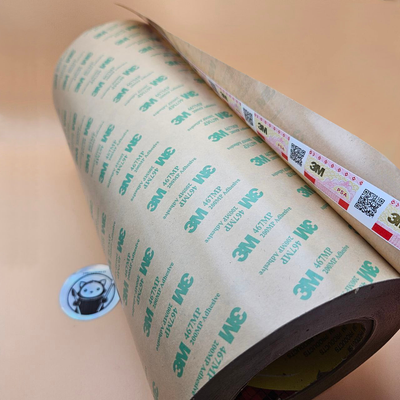
Our PU leatherette ships with built-in TPU melt-adhesive backing, so for hat patches, tags, and applique the workflow is just cut and iron. For non-fabric substrates, 3M tape or E6000 work well. The face is slightly non-stick, so for visible-face bonds, scuff lightly with 400 grit before applying adhesive. See our best adhesives for leatherette article for the full breakdown.
Safety
All laser cutting requires active fume extraction, on every material. PU leatherette is no exception. The fumes from PU are not dangerous in the way PVC fumes are, but they are still fumes and need to leave the room. PVC is the material this article tells you to never put in a laser, full stop.
Frequently asked questions
Q: My fabric store leatherette has no label. Can I test a tiny piece in the laser? A: No. A single small PVC cut still deposits chlorine inside the machine. Use the burn test (outdoors, on a tiny offcut) instead.
Q: I have been cutting unknown leatherette for months. What should I do? A: Stop. Inspect the inside of your laser for white residue, especially around mirrors and the lens. Clean with isopropyl alcohol. Watch metal parts for corrosion in the following weeks. Going forward, source only confirmed PU.
Q: Are PU and PU leatherette the same thing? A: Yes. "PU leatherette" is the long form, "PU" is the polymer. The fabric in your hand is a layer of PU bonded to a fabric or felt backing.
Q: Does PU come in different qualities? A: Yes. Lower-end PU is thinner, has a weaker bond between the face and backing, and may use cheap pigments that fade with engraving. Higher-end PU is thicker, more consistent, and engraves with better contrast. Buy from a supplier who specifies thickness and tested-with-a-laser results.
Q: What thicknesses are typical for PU leatherette? A: 0.6 to 1.4 mm is the common range. Bag bases use 1.2 to 1.4 mm. Hat patches and keychains use 0.8 to 1 mm. Bookmarks use 0.6 to 0.8 mm.
Q: Can PU stretch out of shape on a laser bed? A: Slightly, with thin sheets and aggressive air assist. Mask the back to a sacrificial board or use a hold-down jig for parts that need to stay precise.