
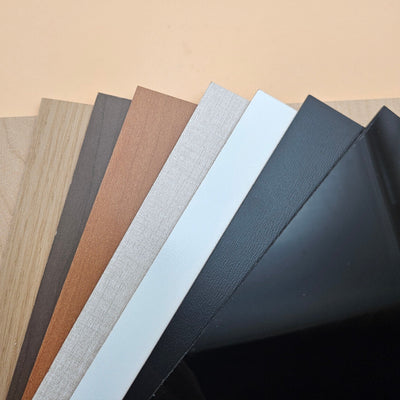

Beginner Leatherette: Laser-Cut Crochet Basket & Bag Base + Free Designs Included
Updated May 2026
In this guide we'll cover the materials, hole sizing for the yarn you've got, and how to design your base using our free Crochet Base Generator.
What you'll make

Materials you'll need
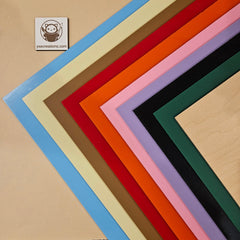
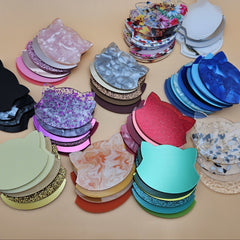
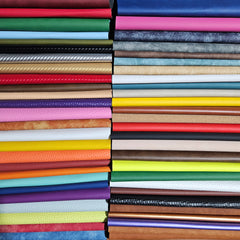
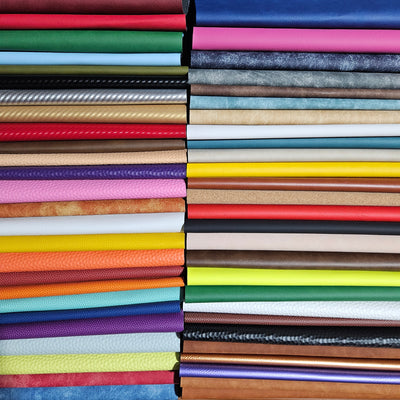
The leatherette
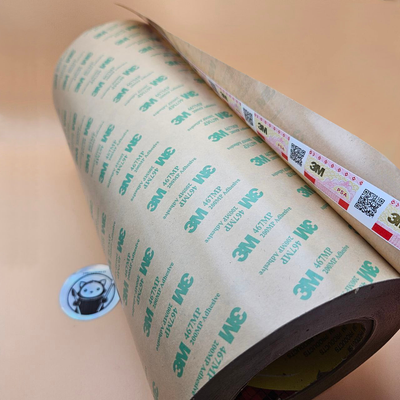
For crochet bases, 1.2mm "Craft" leatherette is the sweet spot, stiff enough to keep its shape, flexible enough to lay flat on a shelf without curling. Goes for almost any basket or bag size up to a medium tote. You can take one sheet with adhesive and one without and iron them on together to have double sided sheet!- 0.8mm "Flexible": softer feel, drapes a bit. Use for small soft pouches, drawstring bags, or where you want the base to be foldable
- 1.2mm "Craft": the default for baskets, plant covers, and most bags
- 1.8mm "Premium": rigid, holds shape under heavy load. Use for big floor baskets, pet beds, or bags carrying weigh
Color combinations that sell
The base + yarn pairing is the whole aesthetic. Some that pop at markets:
- Cognac / Tan leatherette + cream cotton yarn, boho farmhouse classic
- Black leatherette + grey or white yarn, modern minimalist
- White leatherette + soft pink / sage yarn, nursery / baby shower
- Dark green leatherette + mustard yarn, autumn / cabin
- Metallic gold leatherette + ivory yarn, wedding centerpieces
The yarn
Match your yarn weight to the hole size you'll cut. Common pairings:| Yarn type | Hook size | Recommended hole size |
| T-shirt yarn / zpagetti | 8–10 mm | 6 mm |
| 5mm macrame cotton cord | 7–8 mm | 6 mm |
| Chunky merino / wool roving | 8–10 mm | 6 mm |
| Worsted-weight cotton | 5–6 mm | 4 mm |
| Cotton DK / sport weight | 4 mm | 3 mm |
T-shirt yarn (zpagetti) is the most beginner-friendly, thick, forgiving on tension, and widely available. One ball of zpagetti yarn covers a small basket; two balls do a medium tote.
A crochet hook
Match the hook to the yarn (not the holes, the hook only goes through the holes once per stitch). For chunky cotton or t-shirt yarn, an 8mm or 10mm hook.Optional: leather strap hardware
For a tote or shoulder bag, you'll want leather strap rivets or D-rings to attach handles. The generator can add slot cuts for strap attachments, see Step 5 below.Understanding hole sizing, the only setting that really matters
Get the holes right and the rest is forgiving. Get them wrong and the project is unrecoverable.Hole size: match the hook, not the yarn
The hole has to fit your crochet hook + the yarn loop on the hook, with a little slack. A 6mm hole comfortably passes an 8mm hook with chunky yarn, the hook compresses, the yarn slides through.Hole spacing: 10mm is the safe default
Holes spaced 10mm center-to-center along the perimeter works for almost any chunky yarn project. The crochet stitch (single crochet or half-double crochet) covers the gap between holes naturally.Hole inset from the edge: 5–7mm
Holes need to sit far enough from the cut edge that pulling yarn through doesn't tear the leatherette. 5–7mm from the edge is sturdy for 1.2mm leatherette. For thinner 0.8mm, bump to 7–8mm.Designing your base with the generator
Open the Crochet Base Generator.

Step 1: Set your units
In the Settings panel at the top, set Units to your preference. The tool defaults to inches, switch to mm if you prefer metric (most of the recommendations in this guide are in mm). The same number you type adjusts to the unit you pick.
Step 2: Pick the shape
Under Shape & Size, choose Base Shape. The default option is Circle / Oval, one entry that handles both:
-
Leave the Locked toggle ON (Width = Height locked together) → you get a perfect circle . Best for yarn baskets, plant pot covers, drum-shaped totes
-
Toggle Locked OFF and set Width and Height independently → you get an oval . Best for shoulder bags, French market totes, longer planters
If the tool offers other shapes (Rectangle, Square), they appear in the Base Shape selector. Round is the easiest to crochet for beginners, every stitch is identical, no corners to navigate.

Step 3: Size the base
Set Width / Height under Shape & Size. The default value is small (3.94 in / 100mm), bump it up for most projects:
|
Project |
Recommended size |
|
Small yarn cup / pen holder |
80–100 mm (3.15–3.94 in) |
|
Medium basket (toiletries, snacks) |
130–180 mm (5.1–7.1 in) |
|
Tote bag base |
200–250 mm (7.9–9.8 in) |
|
Large floor basket |
280–320 mm (11–12.6 in) |
|
Plant pot cover (fits a 6" nursery pot) |
~180 mm (7.1 in) |
|
Plant pot cover (fits a 10" pot) |
~280 mm (11 in) |
For plant pot covers, measure the bottom diameter of your nursery pot (not the rim) and add 5–10mm slack.
Step 4: Hole Diameter
Under Crochet Holes , set Hole Diameter based on the yarn table earlier. For chunky cotton t-shirt yarn (the most common beginner pick), 6mm (0.24 in) . For sport-weight yarn, 3–4mm (0.12–0.16 in) . Default is 5mm (0.20 in), which suits worsted/medium yarn.Step 5: Hole Spacing (target, center-to-center)
Distance between hole centers around the perimeter. 10mm (0.39 in) for chunky yarn, 7–8mm (0.28–0.31 in) for sport-weight.
The label says "target" for a reason, the generator notes "corners and symmetry round the count" , meaning the actual spacing gets nudged slightly to fit a whole number of holes evenly around the shape. The "Crochet Holes (N)" count in the section header updates live, and the actual computed spacing is shown right under the slider (e.g. "Actual spacing: 7.5 mm"). Don't worry about the 0.4mm rounding — it's invisible in the finished crochet.
Step 6: Edge Clearance
How far each hole sits from the cut edge. 5–7mm (0.20–0.28 in) for 1.2mm leatherette; bump to 7–8mm (0.28–0.31 in) for thinner 0.8mm. The default 0.28 in (~7mm) is a safe starting point.
Too close to the edge → leatherette tears between the hole and the perimeter when you pull yarn through. Too far → the crocheted body has a visible "lip" of bare leatherette before the yarn starts.
Step 7: Vector Export → Download SVG
Under Vector Export , click Download SVG . The file contains the perimeter outline and the ring of holes, color-coded so your laser software can run them as separate operations.
Step 8:(Optional) 3D Print version
If you'd rather print the base in PLA / PETG instead of cutting leatherette, scroll to 3D Print Design :
- Extrusion Depth — sets the thickness of the printed base. Default 0.12 in (~3mm) is rigid; bump to 5mm for floor baskets
- Download 3MF — preserves richer print metadata (recommended if your slicer supports it — Bambu Studio, PrusaSlicer, OrcaSlicer all do)
- Download STL — universal fallback if your slicer doesn't read 3MF
For the leatherette aesthetic this guide is about, stick with the SVG path. The 3D-printed version is great if you want a coloured-plastic base for kids' toy bins or stackable storage. You can also use 3 mm plywood as a base~!
Cutting your leatherette base
1. Import the SVG into LightBurn / xTool Creative Space / your laser software
Crocheting from the base
Quick beginner overview, full crochet stitch tutorials are everywhere on YouTube, so this is just the leatherette-specific bits:Troubleshooting
Yarn won't fit through the holes → Hole size is too small. Either re-cut with bigger holes, or switch to a thinner yarn / smaller hook. There's no recovery short of cutting again — measure twice, cut once.Make it yours
- Plant pot covers in 4 sizes, measure your most popular nursery pot diameters (typically 4", 6", 8", 10") and cut a base for each. Sells as a set
- Beach tote, large oval base in white or sand leatherette + chunky natural cotton yarn body + leather rope handles riveted through strap slots
- Wedding centerpiece basket, metallic gold or rose-gold leatherette + ivory yarn, fill with eucalyptus or dried flowers
- Christmas gift baskets, small (130mm) bases in red, green, or kraft-tan leatherette + matching yarn. Fill with treats. Sell at holiday markets
- Personalised baby gift, engrave the baby's name on the base, crochet in nursery colors. Premium gift item
- Modular toy bins, square 200mm bases in primary colors, kid stacks them on a shelf