


No-stitch leatherette wallet (laser-cut tutorial)
Updated Jun 2026TL;DR: A no-stitch wallet is a laser-cut leatherette card holder folded along scored creases and held closed with a snap. No sewing machine, no glue. This tutorial walks the design, the laser settings, the folding, and the snap installation. The finished wallet holds 2 to 4 cards plus folded cash, and takes about an hour from cut to closed.
What you are making
A flat piece of 1.0 mm PU leatherette, cut to a specific outline with three score lines along the fold zones. After cutting, the piece folds into a three-panel wallet that closes with a single snap. The folded wallet measures about 75 by 100 mm, fits in a back pocket, and holds:
- 2 to 4 credit cards or business cards in the primary card slot
- 2 to 3 folded bills in the bill pocket
- A small ID card in an optional ID slot
The whole construction is one piece. No stitching, no glue.
What you need
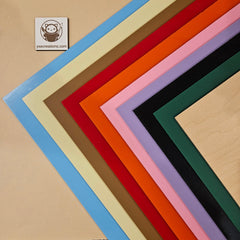
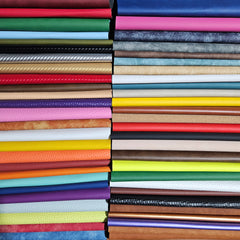
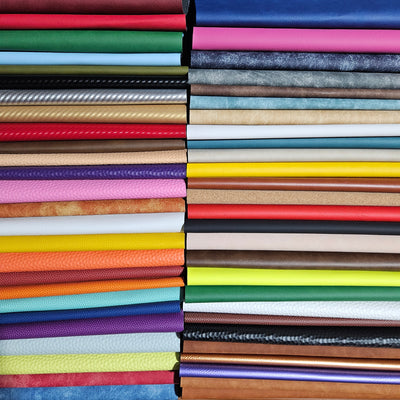
- One sheet of 1.0 mm PU leatherette, at least 200 by 200 mm. Any colour.
- The wallet SVG (free download below).
- A small snap, line 20 or line 24 size (10 to 15 mm). A spring snap is more durable than a magnetic.
- A snap setter or snap pliers.
- A bone folder or a flat plastic edge for crease-setting.
- Ruler.
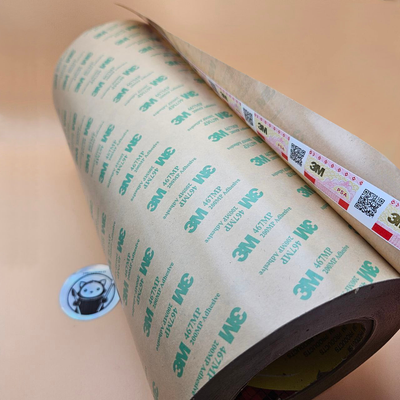
- Optional: 3M tape for corner reinforcement.
Design overview
Free SVG download: a printable wallet template is available on our free designs page. The template has all the score lines, snap holes, and card slots pre-laid out, sized for a standard credit card.
The flat layout looks like this:
- A 100 by 200 mm rectangle, oriented portrait.
- Two horizontal score lines that divide it into three panels: a top closure flap (about 50 mm), a middle wallet body (about 100 mm), and a bottom fold-up pocket (about 50 mm).
- One snap hole in the top closure flap, positioned to align with the snap base on the front panel after folding.
- One snap hole in the front panel, mirrored to the closure flap.
- Two card-slot cuts in the wallet body (two horizontal slits about 70 mm long, spaced for cards to overlap slightly).
- Rounded outer corners, 8 mm radius.
The score lines are essential. They give the leatherette a defined fold line that holds its shape, rather than a soft random crease.
Step by step
Step 1: Cut and score. Load the SVG into your laser software. Set the outer outline and the slots as cut paths. Set the two horizontal score lines as score paths (low power, single pass, just enough to indent the surface). Verify the snap holes are circle cut-outs at the snap diameter (typically 4 mm for line 20).
Settings starting point on 40 W CO2, 1.0 mm PU:
- Cut: 18 to 25 percent power, 100 to 150 mm/s, single pass.
- Score: 6 to 10 percent power, 200 to 300 mm/s, single pass.
Always test on scrap first. Sores should be visible but should not cut more than halfway through.
Step 2: Weed and clean. Peel away the offcut from around the wallet and any masking from the slots. Wipe the face with a dry microfibre cloth to remove char dust. See our weeding leatherette step by step for the full technique.
Step 3: Crease the fold lines. Place the wallet face-up on a hard flat surface. Run a bone folder firmly along each score line. The leatherette will form a crisp fold along the score. Do this for both horizontal score lines.
Step 4: Pre-fold the wallet. Fold the bottom panel up first (the pocket fold), then the top panel down (the closure flap). Press each fold firmly for 30 seconds with a flat hand. The leatherette holds the shape better after a firm initial press.
Step 5: Install the body-side snap. Open the wallet flat. Press the snap base through the snap hole on the front panel (the middle of the three panels, on the surface that will be visible when the wallet is closed). Use your snap setter or snap pliers to lock the base in place. Confirm the snap stud sticks up cleanly from the visible face.
Step 6: Install the flap-side snap. Press the snap top through the snap hole on the closure flap. The snap top should sit on the underside of the flap so it engages with the body-side snap when the flap is folded down. Set with snap setter.
Step 7: Test the closure. Fold the bottom pocket up, fold the closure flap down, press the snap together. The wallet should close cleanly with a positive click. If the snap is misaligned, the snap holes were off. The fix is to slightly elongate one hole with a hole punch and re-set.
Step 8: Reinforce corners (optional). The bottom corners of the pocket take the most stress (cards push down into them). For a longer-lasting wallet, cut two small 8 by 8 mm reinforcement squares from the leatherette offcut and apply them with 3M tape to the inside corners. The TPU adhesive layer on the back of the leatherette can also be ironed to bond reinforcements in place.
The wallet is finished. Final folding to set the creases takes a day; place the wallet under a book overnight to lock the shape.
Variations
Add an ID window. Cut an additional rectangular window in the closure flap, sized to show an ID card behind it. For a clear window, glue a small piece of cellophane or thin acrylic to the inside of the cutout.
Add a coin pocket. Add a small zippered pocket to the bottom panel (this version is no longer fully no-stitch, but it adds capacity).
Personalize. Engrave a name, monogram, or design on the closure flap before assembly. The flap is the visible face when the wallet is closed.
Two-tone. Cut the wallet body in one colour and a separate accent piece (the closure flap, or a card slot trim) in a contrasting colour. Bond with E6000 or 3M 467MP transfer adhesive after assembly.
Troubleshooting
Score lines did not fold cleanly. Score depth was too shallow. Re-score the existing line at slightly higher power. The leatherette can take a second score pass without damage.
Snap pops open when wallet is full. Snap is misaligned, or the snap stud is too small for the load. Use a larger snap (line 24 instead of line 20) or add a second snap below the first.
Card slots are too tight to use. Slits were too short. Lengthen the slot to about 70 mm (slightly wider than a credit card's long edge).
Wallet does not stay folded shut. The score creases were not set properly. Press each fold under a book overnight or use a heat-set technique (gentle iron, low temperature, parchment paper between iron and leatherette).
Frequently asked questions
Q: Can I use 0.8 mm leatherette instead of 1.0 mm? A: Yes, the wallet works but feels less substantial. 1.0 mm is the sweet spot for hand feel and durability.
Q: What size snap should I buy? A: Line 20 (10 mm cap) is the most common for craft work and what most no-stitch wallets use. Line 24 (12 mm cap) is larger and stronger if your customers carry many cards.
Q: I do not have a snap setter. Can I still make the wallet? A: Yes, but the snap installation will be rougher. A flat-head punch and a small hammer work for installing line 20 snaps. Snap pliers ($15 to $30 online) give cleaner results and are worth buying if you make more than a few wallets.
Q: Can I sell these on Etsy? A: Yes. No-stitch wallets are a strong Etsy category. Differentiate with custom colours, monogram engraving, and clean photography. Pricing ranges from $20 to $40 retail depending on personalisation.
Q: How long does the wallet last in real use? A: A year or two of daily use. The score lines eventually soften and the wallet loses its crisp folded shape. Pocket cards survive the whole time; the corners are the failure point. Reinforce them per step 8 to add another year.
Q: Can I machine-wash the wallet? A: No. The snap will damage the washing machine drum, and the score lines will swell and lose their crease. Spot clean with a damp cloth.