



Laser cutter vs traditional leatherworking tools
Updated Jun 2026TL;DR: A laser cutter replaces about half the tools a traditional leatherworker uses: cutting tools, hole punches, marking tools, and pattern transfers. It does not replace the rest: finishing tools, hardware install tools, hand-stitching tools. For PU leatherette work, the laser does almost everything that matters. For real leather work, the laser is the cutting and prep step; the finishing is still hand work.
Two worlds, one product category
Walk into a traditional leather shop and you see hand tools by the hundred: knives, mauls, awls, edge bevelers, slickers, dyes, punches, stitching pony, wing dividers, head knives. Each tool does one thing well. A skilled leatherworker uses thirty tools to make one wallet.
Walk into a laser-craft shop making PU leatherette wallets and you see a laser cutter, a computer, a snap setter, and maybe a bone folder. The laser does the work that thirty hand tools used to do.
This is not because the laser is "better". It is because the laser collapses several specialised tools into one general-purpose machine. The same logic that turned the typewriter, the printer, the calculator, and the fax into one computer.
Knowing which traditional tools the laser replaces, and which it does not, helps you set up a hybrid workflow that uses both worlds where each works best.
Tools the laser replaces
These tools were essential to traditional leatherwork. A laser does all of them, faster and more consistently.
1. Head knife and round knife. The defining hand-cutting tool of leatherwork. Used to cut hide to shape. The laser cuts the same shapes in seconds, with no skill required to track a curve cleanly.
2. Strap cutter. A guide-bar tool that cuts parallel strips for belts, watch straps, dog collars. The laser cuts perfect parallel strips of any width, repeatable to the millimetre.
3. Hole punches. Round drive punches for snap, rivet, and lace holes. The laser cuts the hole during the cut pass, at exact coordinates, with no setup or repositioning.
4. Pricking irons and stitching chisels. The toothed tools that mark and pierce stitching holes. The laser pre-cuts the stitching holes in any pattern, perfectly spaced, before assembly begins.
5. Wing dividers and scratch awl. Used to mark stitching lines and design layouts on the surface. The laser scores or lightly engraves the same marks, at exact coordinates.
6. Lacing chisels. Cut slits for lacing or for decorative cuts. The laser cuts slits of any length and angle.
7. Edge bevelers. Round the cut edge for a finished look. The laser cannot do this on real leather (it cannot mechanically round an edge), but on PU leatherette the cut edge is already cleaner than a beveled hand-cut edge.
8. Pattern paper and tracing wheel. Used to transfer a pattern to the leather surface. The laser cuts directly from the digital file with no transfer step.
Tools the laser does not replace
The laser is a cutting and marking machine. It does not handle assembly, finishing, or hardware installation.
1. Snap and rivet setters. Hardware installation still needs a setter or press. See our hardware for leatherette guide.
2. Stitching pony and stitching tools. If your design uses real stitching (not the no-stitch laser approach), you still need a stitching pony, stitching awls, and needles.
3. Edge bevelers, slickers, edge paint. Edge finishing is hand work. See our edge burnishing guide.
4. Stamps and tooling tools. Decorative leather tooling (basket weave, floral patterns, hand-carved designs) is hand work. The laser can engrave a similar look but it reads as engraved, not as tooled. Different aesthetic.
5. Dyes and conditioners. Surface treatment for real leather. The laser does not dye. PU does not need dyeing.
6. Burnishing wheels and finishing tools. Edge sheen comes from hand burnishing or a rotary tool, not the laser.
Side-by-side workflow comparison
For a typical no-stitch wallet:
Traditional leatherwork workflow:
- Trace pattern onto leather (5 min).
- Cut outline with head knife (10 min).
- Mark hole positions with wing dividers (5 min).
- Punch holes with drive punches (5 min).
- Bevel edges (10 min).
- Burnish edges (15 min).
- Set snap (3 min).
Total: about 53 minutes per wallet, skilled hand work.
Laser workflow:
- Open SVG, load into laser software (2 min, one time per design).
- Laser cut and score the wallet (5 min, including snap holes).
- Crease score lines (3 min).
- Set snap (3 min).
- Optional: burnish or edge paint (5 to 15 min).
Total: 18 to 28 minutes per wallet, lower skill requirement.
The laser saves about 60 percent of the time on this style of project. The skill required shifts from manual cutting accuracy to design software and laser tuning. Different skill set, lower barrier to entry for the first product.
Where traditional skills still matter
The laser does not make a leatherworker. Several skills remain valuable regardless of cutting method.
Design literacy. Understanding leather's grain direction, where a piece flexes, where it takes wear. PU does not have grain but the wear principles transfer.
Hardware sense. Choosing the right snap, rivet, eyelet for the load. Traditional training here is directly useful in laser-craft work.
Edge finishing. As covered in the edge burnishing article, the finishing techniques transfer almost completely.
Pattern design. Building a pattern that folds, snaps, and assembles cleanly. The laser will cut whatever you give it, including bad designs.
Customer expectations. A leatherworker knows what "premium" feels like in the hand. That intuition is valuable when designing PU products that need to compete with leather goods.
For a traditional leatherworker considering adding a laser: your existing skills mostly transfer. The laser changes the cutting and marking step. Everything you know about design, hardware, and finish is still relevant.
For a laser-craft maker who has never done leatherwork: borrowing techniques from leatherworking will improve your products meaningfully. Edge finishing alone moves a $15 keychain to a $25 keychain in perceived value.
Which materials each is best for
Real leather: Best with traditional hand cutting. The laser cuts real leather, but a head-knife cut leaves the edge softer (good for hand finishing), while a laser cut leaves a slight char (acceptable but different look). For premium real-leather goods, traditional cutting is the higher-quality choice.
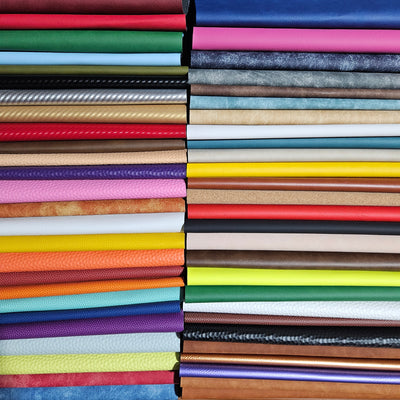
PU leatherette: Best with laser cutting. PU has no grain, so the laser's straight-line cuts match the material's character perfectly. Hand-cutting PU is slow and the edges are no better than laser cuts.
Vegan leather alternatives (mushroom-based, cactus, apple peel): Variable. Test laser cutting on small samples; some accept the laser well, some scorch.
Hardware compatibility
This is worth its own callout. Every piece of hardware used in traditional leatherworking works on PU leatherette. Snaps, rivets, eyelets, screwposts, D-rings, magnetic clasps. The hardware does not know what material it is set into.
This means a leatherworker's existing hardware inventory transfers directly to laser-craft work. No re-investment needed.
It also means a laser-craft maker can shop the specialty leather-craft hardware market for far wider hardware selection than generic craft suppliers offer.
Frequently asked questions
Q: I am a leatherworker considering adding a laser. Will it replace my skills? A: Not your skills, just your cutting and marking tools. The laser is a CNC for the prep work. Design, hardware, finishing, and customer eye for quality remain hand skills.
Q: I am a laser-craft maker. Should I learn traditional leatherwork? A: Edge finishing and hardware specifically. Those two skill sets will lift your products meaningfully. Full traditional leatherwork is not necessary unless you plan to also work in real leather.
Q: Is laser-cut leather the same quality as hand-cut leather? A: Different, not better or worse. Laser-cut leather has a slight char on the edge that hand-cutting does not. Some markets read the char as premium (handmade, intentional). Others read it as "machine cut" and prefer hand-cut. Know your market.
Q: Can a laser do leather tooling (stamped patterns)? A: It can engrave similar patterns, but engraved does not feel like tooled. A tooled leather basket weave has depth and the leather is compressed; a laser-engraved basket weave has the pattern but no compression. Different aesthetic.
Q: What is the most useful traditional leatherworking tool to buy alongside a laser? A: An edge slicker and a small bottle of edge paint. Burnishing and edge finishing are the highest-leverage hand techniques to add to a laser workflow.
Q: Why do laser-craft makers tend to use PU leatherette over real leather? A: Consistency, price, and Canadian customer preference. PU is consistent sheet to sheet (great for production), 2 to 4 times cheaper, and many customers prefer the vegan-friendly material. Real leather still has a market, just a smaller one.