

Real leather vs PU leatherette for laser cutting
Updated Jun 2026TL;DR: Both real leather and PU leatherette laser well. They give different cut edges, different smells, different price points, and different customer perception. PU is consistent, cheaper, and easier to design around. Real leather is premium, variable, and harder to source in laser-friendly form. For most laser-craft products (hat patches, keychains, bag bases, bookmarks), PU is the right choice. For premium hand-crafted goods where the customer cares about real leather, source vegetable-tanned leather and cut carefully.
Two materials, one product category
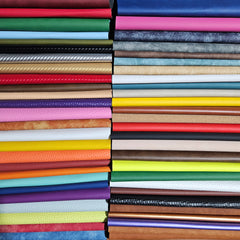
Walk into any craft show and you will see hat patches, keychains, and accessories made from both real leather and PU leatherette. Side by side, a customer often cannot tell which is which until they pick them up. The difference matters more for the maker than for the buyer:
- Real leather. Animal hide, tanned. Natural grain, natural colour variation, a smell people recognise. Premium-priced. Variable supply and variable cut behaviour.
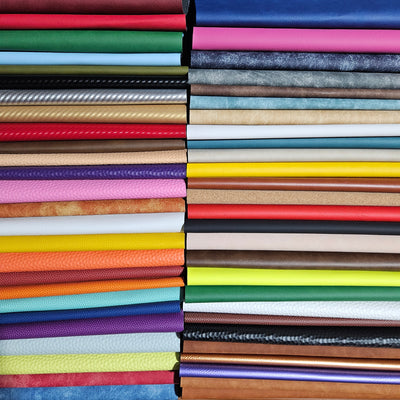
- PU leatherette. Polymer-based synthetic. Consistent grain, consistent colour, no animal smell. Mid-priced. Consistent supply and predictable cut behaviour.
This article covers how the two compare under a laser specifically. For a full discussion of vegan options and PVC concerns, see PU vs PVC leatherette.
Side by side
- Cut edge. Real leather is slightly charred, darker than the face. PU is clean and matches the face colour.
- Engrave look. Real leather reads burned-in and varies hide to hide. PU is clean and consistent.
- Smell during cut. Real leather is strong and organic. PU is plasticky, contained with good extraction.
- Consistency. Real leather varies hide to hide. PU is consistent sheet to sheet.
- Thickness control. Vegetable-tanned leather is precise; chrome-tanned is variable. PU is precise across the sheet.
- Cost per square foot. Real leather is high; PU is mid.
- Sourcing. Real leather comes from specialty tanners. PU has wide laser-supplier availability.
- Customer perception. Real leather reads "premium"; PU reads "quality synthetic".
- Vegan-friendly. Real leather, no. PU, yes.
- Adhesion. Real leather varies by tan type. PU is predictable.
What real leather is like under a laser
Real leather cuts well, with caveats.
Vegetable-tanned leather (also called veg-tan, tooling leather, saddle leather) is the standard choice for laser work. The tanning process uses tree-bark tannins instead of chromium. It cuts cleanly, engraves beautifully (the heat caramelises the surface to a darker brown), and the cut edge stains in a way many makers like.
Chrome-tanned leather uses chromium salts. Most commercial leather (jackets, shoes, upholstery) is chrome-tanned. It can be lasered, but the chromium content has health implications: the fumes contain hexavalent chromium, a carcinogen. Cutting chrome-tanned leather requires extra-aggressive extraction and is best avoided for hobby work.
Oil-tanned leather has waxes and oils that flame more easily during cutting. Possible to laser with low power and good air assist, but more fire-prone than veg-tan.
Reverse / suede. The fuzzy back of leather. Cuts cleanly on most leather types but engraving suede gives soft contrast.
For laser-craft purposes, "real leather" effectively means veg-tan unless you have a specific reason otherwise.
Cut edge: what to expect
Real leather cut edge: A slight char on the cut, darker than the surrounding face. The char can be brushed off with a stiff brush or sanded down. Many makers like the burnt edge for its handmade feel.
PU leatherette cut edge: A clean cut that matches the face colour because the dye runs through the full PU thickness. Edge is straight and uniform. No post-processing needed.
If you want the edge to disappear into the design, choose PU. If you want the edge to be a feature (the visible burnt outline of a hand-cut piece), choose veg-tan.
Engrave behaviour
Real leather engraves: The laser heats the surface, the tannins darken, and the engrave reads as a burned-in mark. Contrast is excellent on natural-coloured leather. The engrave deepens slightly with multiple passes, giving an embossed feel.
PU leatherette engraves: The laser removes a thin layer of surface dye, exposing the substrate. Contrast depends on the colour combination (see our leatherette colour and engraving contrast guide). No tannin chemistry, just dye removal.
For monograms, names, logos: both work. Real leather looks more "burned in"; PU looks more "printed in".
Consistency: where PU wins
If you are running production, consistency is everything. PU leatherette ships as flat sheets of consistent thickness and colour. The 10th piece looks identical to the 1st.
Real leather is a natural product. Hides vary in:
- Thickness across the same hide (typically 0.5 to 2 mm variation).
- Surface texture (some areas smoother, some pebbled, some with healed scars).
- Colour (natural veg-tan ranges from pale tan to medium tan even within one batch).
- Density (looser areas at the belly, tighter at the back).
For one-off pieces this variation is character. For a 50-unit Etsy order, it is a production headache.
Cost
Approximate at-supplier costs (Canadian dollars, 2026):
- PU leatherette: $20 to $50 per square metre depending on quality and finish.
- Veg-tan leather: $80 to $200 per square metre for laser-suitable thicknesses.
PU is 2 to 4 times cheaper per area. Add the higher waste rate on leather (irregular hide shapes, defects to cut around) and the gap is bigger.
For pricing on Etsy, real leather products typically command 2 to 3 times the price of PU equivalents. So margins can be similar; the question is whether the slower production and higher variability are worth the higher price point.
Customer perception
This varies more than makers expect. A few patterns from the market:
- Vegan and eco-conscious customers actively prefer PU and specifically avoid leather.
- Western, equestrian, and traditional craft customers prefer real leather and will check for it.
- General gift buyers do not distinguish unless one is explicitly labelled.
- "Genuine leather" is a regulated label in some markets. Do not call PU "leather" of any kind.
If your brand positioning is craft-quality and modern-looking, PU often outperforms. If your positioning is traditional, handmade, and premium, real leather is the lift.
Sourcing notes
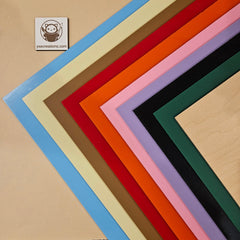
PU leatherette: Wide availability from laser suppliers. Confirmed-PU (not PVC) listings are easy to find. We carry a full colour and thickness range; see /collections/pu-leatherette.
Real veg-tan leather: Source from saddleries, leather workshops, and specialty tanners. Standard thicknesses for laser work: 2 to 3 oz (0.8 to 1.2 mm) for accessories, 4 to 5 oz (1.6 to 2 mm) for thicker pieces. Avoid hides labelled "garment leather" or "upholstery leather" without confirming the tanning method.
Settings differences
PU leatherette settings: Predictable. A recipe that works on one sheet works on every sheet. See our community settings database for tested combinations.
Real leather settings: Variable. Even within the same hide, denser areas need more power than looser areas. Tune for the densest area, accept that thinner areas may char more. Run a test cut on each new hide.
A starting point for veg-tan leather on a 40 W CO2:
- 2 to 3 oz: 50 mm/s, 40 percent power, single pass
- 4 to 5 oz: 25 mm/s, 60 percent power, single pass
These are rough; tune to the hide.
Safety
All laser cutting requires active fume extraction. Both real leather and PU leatherette produce fumes that need to leave the room.
PU fumes: Plasticky smell, irritating but not actively dangerous with good extraction.
Real leather fumes: Organic smell, more pungent. Veg-tan is the lowest-risk option. Chrome-tanned leather produces hexavalent chromium fumes which are carcinogenic; this is the strongest reason to use veg-tan only.
Frequently asked questions
Q: Can I label PU products as "vegan leather"? A: Yes, "vegan leather" is the standard marketing term for PU. Do not label as "leather" or "genuine leather" because those terms typically have regulatory definitions tied to animal hide.
Q: How do I tell if leather is veg-tan or chrome-tanned? A: Veg-tan smells faintly woody, takes a tooling stamp cleanly, and edges burnish with friction. Chrome-tanned is grey-blue on the cross-section and stays the same colour throughout. Ask the supplier if uncertain.
Q: My veg-tan keeps catching fire during cuts. What is happening? A: Power too high, speed too slow, or the hide has waxes/oils. Drop power 10 to 15 percent, increase speed, increase air assist. If a specific hide keeps flaming, retire it from laser work and use it for hand-tooling.
Q: Can I cut suede? A: Yes, with low power and high speed. The cut is messy (loose fibres) and engraves read soft. Most suede projects use cut-only designs without engraves.
Q: Is real leather worth the extra hassle for Etsy? A: For some product categories yes, others no. Premium hat patches with western branding: yes. General gift keychains: usually no. Test market response with both in a small listing run before committing.
Q: Will real leather and PU coexist in my catalog confuse customers? A: Not if the listings are clear. Label each product with the material in the title and description: "Vegan leather hat patch (PU)" vs "Veg-tan leather hat patch". Customers self-select.