




Hat patches that actually adhere: TPU iron-on guide
Updated Jun 2026TL;DR: A hat patch that peels after one wash is a refund. The fix is almost always surface prep, not the adhesive. Our leatherette ships with TPU melt adhesive built into the back, so the workflow is short: cut, weed, peel the release liner, iron onto the hat. This article walks the technique and the gotchas, with wash-test results.
Why hat patches peel
Almost every peeling hat patch comes from one of five problems. In order of how often we see them:
- Skipped surface prep. The hat or the patch had skin oils, fabric softener residue, laser char dust, or release agents on the surface. The adhesive bonded to the residue, not to the substrate. A wash cycle dissolves the residue and the patch lifts.
- Wrong hat material. Smooth-woven hats (cotton twill, polyester twill, wool felt, nylon ripstop) iron-on cleanly. Textured hats (fleece, sherpa, sweater knit, anything with a pile) cannot accept melt adhesive evenly because the pile holds the patch off the substrate.
- Iron temperature or dwell time wrong. TPU melt adhesive activates around 130 to 150 C. Too cool and the bond never forms; too hot and the leatherette face distorts. Each leatherette colour can need a slightly different temperature.
- Insufficient cure time before stress. TPU reaches full bond strength as it cools fully. A patch pulled hot or washed within hours of application peels because the polymer chains have not fully re-set.
- Patch is too small for its design. A 25 mm patch with a complex shape has less total bonded area than a 50 mm round patch. Less area means more stress per square millimetre when the hat flexes, and earlier failure.
Fix all five and you have a patch that lasts the life of the hat.
Why iron-on TPU is the right default
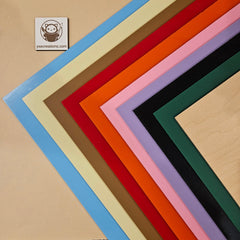
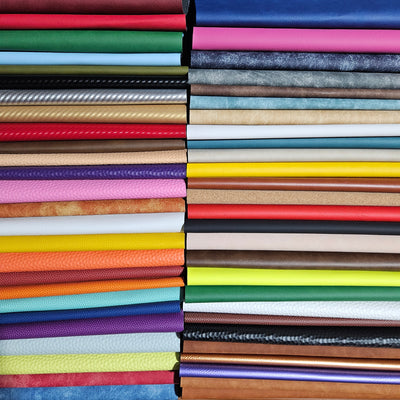
Our PU leatherette ships with a TPU (thermoplastic polyurethane) melt-adhesive layer on the back face, protected by a release liner. The laser cuts through the leatherette and the TPU layer in a single pass, so when you weed a finished patch, both layers are already there. No separate tape purchase, no transfer-adhesive step, no spray-glue mess.
TPU melt adhesive is what most commercial heat-transfer patches use. It bonds tightly to woven and brushed-cotton fabrics, survives cold and warm wash cycles, and stays flexible (so it does not crack when the hat flexes).
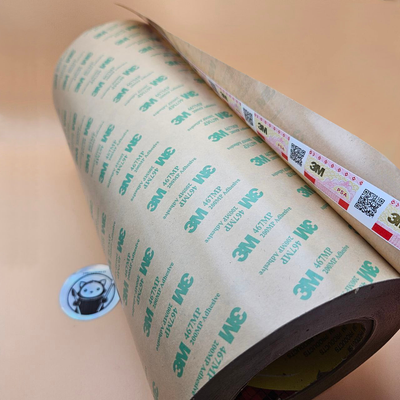
For sizes and shapes where iron-on is not enough on its own (very large patches, structured foam hats, places where you cannot get a household iron flat against the surface), a piece of 3M double-sided tape across the back of the patch adds insurance. See our 3M tape collection.
What you need
- Laser-cut patches in our PU leatherette (0.8 mm thickness is the sweet spot).
- A household iron, hand press, or small heat press.
- A piece of parchment paper or a non-stick teflon sheet to put between the iron and the patch.
- Isopropyl alcohol and a lint-free cloth for surface prep.
- The hat.
Step by step
Step 1: Clean the patch back. After weeding, wipe the back face of the patch (the TPU side, under the release liner) with a dry lint-free cloth to remove laser char dust. Do not use solvents on the TPU; keep this step dry.
Step 2: Clean the hat surface. Wipe the area of the hat where the patch will sit with isopropyl alcohol on a clean lint-free cloth. Let dry for 30 seconds. This removes fabric softener, body oils, and any factory treatment that blocks adhesion.
For brand-new hats: the alcohol step is still important. New hats often have factory-applied fabric protectors.
Step 3: Set the iron. Set a household iron to the cotton or wool setting (medium-high), no steam. If you have a heat press, 130 to 150 C is the right range. Let the iron come up to temperature for at least a minute.
Step 4: Peel the release liner. Lift the protective backing off the back of the patch. The TPU adhesive layer is now exposed. From this point you have a few minutes before stray fingerprints reduce bond strength; do not handle the back face.
Step 5: Position the patch. Place the patch on the hat in its final position. The TPU side is now in contact with the hat fabric.
Step 6: Cover and press. Lay a piece of parchment paper or a teflon sheet over the patch. This protects the leatherette face from direct iron heat. Press the iron down with firm pressure for 12 to 18 seconds. Do not slide the iron; lift and reposition if you need to cover the whole patch.
Pressure matters as much as heat. A heat press at 2 to 3 bar is ideal. With a hand iron, lean on it.
Step 7: Lift the iron and let cool. Lift the iron away. Leave the parchment in place and let the patch cool for at least 60 seconds before peeling the parchment back. The TPU continues bonding as it cools; touching or pulling the patch warm can break the bond.
Step 8: Inspect. Run a fingernail around the edge. The patch should feel fully bonded with no lifted corner. If a corner is loose, lay the parchment back and re-iron that spot for 10 seconds.
The patch is finished. Hold off washing for at least 24 hours so the TPU re-set completes.
Troubleshooting
Almost every "failed iron-on" is one of three things: not enough heat, not enough pressure, or not enough cool-down time. Walk all three before changing materials.
A corner of the patch lifts after the first wash. Heat or pressure was insufficient at that corner. Lay the parchment back, re-iron the lifted edge for 10 seconds, and let cool fully. Cold-wash the hat going forward.
The whole patch fell off in the dryer. Wash and dryer heat exceeded the TPU softening range, or the bond never fully formed in the first place. Update the listing's care instructions to "cold wash, low-heat or air dry".
The patch is curling at the edges. The patch was placed on an uneven surface during ironing, or the iron only contacted the centre. Use the parchment-cover technique and reposition the iron to cover edges separately.
The leatherette face looks shiny or distorted after ironing. Iron was too hot, or you ironed without parchment. Lower the temperature one notch and always use a non-stick cover sheet.
The patch slid out of position during pressing. The iron slid instead of pressing down. Press straight down, hold, lift. Do not stroke the iron back and forth.
Customers report patches falling off after a few months. Hot-water wash or high-heat dryer. Cold wash + air dry preserves the bond for the life of the hat. Add a care card to each sale.
Patch size and shape rules
The smaller the patch, the more it relies on perfect adhesion. A few practical rules:
- Minimum bonded area: 6 square cm for a wash-durable patch. A 25 mm circle is right at the edge; bigger is safer.
- Avoid skinny features extending from a main body. A 5 mm finger sticking out of a 30 mm patch will peel first. Keep features wide where they meet the main body.
- Round corners survive better than sharp corners. A 90 degree external corner concentrates stress; a 5 mm radius distributes it.
- For multi-piece patches, bond as one assembled unit (sub-assemble first, then iron to hat) rather than placing pieces individually.
For very large patches (over 80 mm long axis) or patches on structured foam hats where the iron cannot get flat, add a strip of 3M double-sided tape (from our 3M tape collection) along the back as supplementary support. Iron first, then place the tape strip and press through the parchment.
Hat type compatibility
- Snapback (flat front, cotton or poly twill) — excellent. The sweet spot for iron-on patches.
- Dad hat (curved, brushed cotton) — very good. Smaller patches (under 60 mm) recommended; tight curve resists large flat patches.
- Trucker (foam front, mesh back) — good. Iron carefully; foam compresses under heat and pressure.
- 5-panel (cotton, structured) — excellent. Same logic as snapback.
- Knit beanie — tricky. The knit stretches under pressure. Use a small, simple patch and a low temperature.
- Fleece or sherpa — avoid. Pile holds the patch off the substrate. Use a flat-weave hat instead.
Frequently asked questions
Q: Do I need to buy a heat press to do this professionally? A: No. A household iron at the right temperature and pressure gives commercial-grade bonds. A heat press makes batches faster (10 patches in 5 minutes versus 15 minutes with a hand iron) and is worth the investment if you are doing volume.
Q: How long does an iron-on patch last in real use? A: With cold-wash care, a year or two of daily wear. The hat usually fails (sweat-stained band, frayed brim) before the patch fails.
Q: My patches keep coming off snapback hats but stay on dad hats. Why? A: Snapbacks often have a stiffer front panel with a factory coating that resists alcohol cleaning. Clean more aggressively (alcohol followed by a quick acetone wipe, dry) before applying. Some snapback panels just resist; for those, switch to a piece of 3M tape from our tape collection as a backup.
Q: Can I iron patches onto real leather hats? A: On smooth-finished leather, yes, with reduced temperature (real leather scorches above 150 C). Suede and oil-tanned leather are not compatible.
Q: What about glow-in-the-dark or reflective leatherette? Does it iron-on differently? A: Same TPU backing as our standard PU leatherette, so the iron-on workflow is identical. Coated faces sometimes need slightly longer dwell time; test on a sample.
Q: My customer wants a removable patch. Is that possible? A: Not with iron-on TPU; the bond is permanent. For removable, use hook-and-loop (Velcro) attached to both the patch and the hat. Sew a small piece of hook to the back of the patch, glue or sew loop to the hat panel.
Q: Can I re-iron a patch that has peeled? A: Yes, usually. Clean the hat again, re-position, re-iron for 15 seconds with parchment. Works for first-time peels; repeated peels mean the substrate has degraded.