
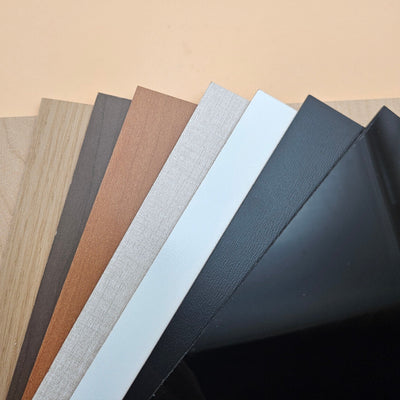


Leatherette bag bases for crocheters, knitters, sewists
Updated Jun 2026TL;DR: A bag base is a stiff leatherette panel with pre-cut holes around the perimeter. Crocheters, knitters, and sewists use it as the foundation of a finished bag. The base gives the bag structure, the holes carry the yarn or thread. Pick 1.0 to 1.4 mm leatherette, match the hole size to your yarn or hook, and the bag holds its shape through years of use.
What a bag base is
If you have made a bag from scratch, you know the bottom is the hardest part. Crocheted bottoms sag under weight. Knitted bottoms stretch over time. Fabric bottoms need a separate stiffener to hold their shape.
A leatherette bag base solves all three. It is a flat, laser-cut panel of PU leatherette (typically oval, rectangle, or shaped) with a row of evenly-spaced holes around the perimeter. The maker threads the bag's first row directly through the holes, anchoring the body of the bag to a stiff foundation that lasts.
Bag bases are popular with three communities:
- Crocheters use them as the foundation for tote bags, market bags, and project bags.
- Knitters use them for shaping knit bags and as a clean attachment point for handles.
- Sewists use them as pre-cut bottoms for fabric bags, eliminating the need to interface or stiffen separately.
Why leatherette is the right material
Other options exist (rigid plastic, fabric-covered cardboard, real leather), but PU leatherette wins on four counts:
- Cuts cleanly with precise hole spacing. Laser cutting puts the holes exactly where you need them. No marking, no punching, no fraying.
- Holds shape under load. A 1.2 mm leatherette base supports a loaded grocery bag without bowing or cracking.
- Looks finished as the visible bottom of the bag. PU has the look of a quality bag bottom. No need to line or cover.
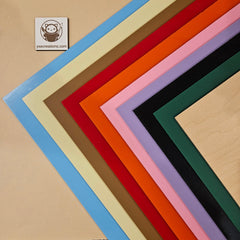
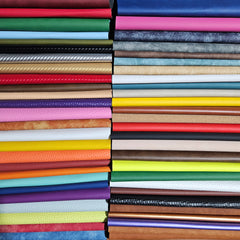
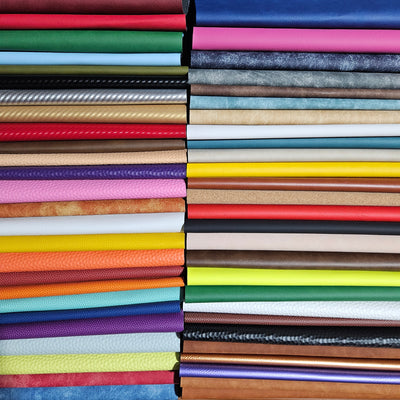
- Available in colours that match yarn lines. White, black, beige, navy, and most popular yarn colours.
Sizing your base
The base shape and size determines the bag's footprint and capacity.
Small project bag (crochet hook caddy, small market bag): Round or oval, 12 to 18 cm long axis.
Standard tote (groceries, daily use): Oval or rectangle, 20 to 28 cm long axis, 12 to 18 cm short axis.
Large tote (beach bag, knitting project bag): Oval or rectangle, 30 to 40 cm long axis, 18 to 25 cm short axis.
Backpack body: Rectangle, 22 to 28 cm long axis, 12 to 16 cm short axis. Backpacks need narrower bases than totes because they sit against the back.
The bag walls extend up from the base perimeter. If you want a 30 cm tall bag, plan for at least 35 cm of yarn from the base to the top to allow for the handle attachment.
Choosing thickness
- Small project bag, light yarn — 1.0 mm. Light enough to fold the bag flat, stiff enough to hold shape.
- Standard tote, mid-weight yarn — 1.2 mm. The sweet spot; flexes slightly under load without bowing.
- Heavy-duty tote, bulky yarn or t-shirt yarn — 1.4 mm. Holds shape under serious weight.
- Sewing project, lined bag — 1.0 mm. Sews easily, lighter weight in the finished piece.
- Backpack body — 1.2 to 1.4 mm. Structural; resists compression on the back.
Hole sizing
The hole size depends on the yarn or thread you will use, and on the technique.
Crochet with a 5 mm hook (worsted weight yarn). Holes 4 to 5 mm in diameter, spaced 6 to 8 mm centre to centre.
Crochet with a 6 mm hook (bulky yarn). Holes 5 to 6 mm in diameter, spaced 8 to 10 mm centre to centre.
Knitting (bulky yarn). Holes 5 to 6 mm in diameter, spaced 6 to 8 mm centre to centre.
Sewing with regular thread. Holes 1 to 2 mm in diameter, spaced 3 to 5 mm centre to centre. Sewists often prefer a pre-cut hole row rather than punching.
T-shirt yarn or chunky cord. Holes 6 to 8 mm in diameter, spaced 10 to 12 mm centre to centre.
If you sell bag bases, label the listing with the recommended yarn weight or hook size. Customers want to buy a base that matches the yarn they already have.
Attachment techniques
Three common ways to attach the bag body to the base.
Single-row crochet through holes. The maker crochets the first row of the bag body directly through the leatherette holes. Strong, classic, and the most common technique. Works with worsted, bulky, and t-shirt yarn.
Sewn attachment. A sewist machine-stitches or hand-stitches around the base perimeter, attaching a fabric body. Holes can be evenly spaced for a decorative top-stitch row or hidden behind the fabric.
Lacing. The maker laces a contrasting cord through the holes to attach a leather or fabric body. Decorative and removable. Less common but visually distinctive.
Designing a base from scratch
If you want to design your own bag base in Illustrator or Inkscape, a workflow:
- Outline the shape. Oval, rectangle, or a custom outline. Round corners with a 5 to 10 mm radius for a softer profile.
- Inset the hole row from the edge. Holes sit 5 to 8 mm from the edge of the base. Too close and the base tears under load; too far and the bag wall looks loose at the bottom.
- Space the holes evenly. Use the path-divide or step-and-repeat function. For a 200 mm perimeter with 25 holes, spacing is 8 mm centre to centre.
- Size the holes. Match to the technique. Round holes work for most yarn; oval slot-holes work for flat ribbon or t-shirt yarn.
- Add bag-foot mounts (optional). Four small slots on the underside for clip-on bag feet. Decorative and protects the base from wear.
- Add a maker mark (optional). Engrave a small logo or text on the underside. Adds value for resale.
Cut a test sample in the cheapest colour first. Crochet a few rows of the planned yarn through the holes to check fit. Adjust hole size if too tight or too loose.
Production workflow for sellers
If you sell bag bases:
Cut in batches. Set up the laser bed with as many bases as fit, run one program. Batch cutting cuts setup time per unit by 70 percent or more.
Nest tightly. Bag bases are oval or rectangular shapes that nest well. Use a nesting tool (Deepnest, SVGnest) to maximise material efficiency.
Stack and ship flat. Bases stack cleanly. A 20-base stack ships in a small rigid mailer.
Sell as kits. Bag base plus matching yarn and a pattern outsells the base alone by 2 to 4 times in most markets.
Match colour to yarn lines. Stock leatherette colours that correspond to the most popular yarn lines in your target market. White, black, beige, grey, navy, burgundy is a good baseline.
Frequently asked questions
Q: What size hook fits a 5 mm hole? A: A 5 mm hook fits a 5 mm hole exactly, which is too tight for repeated passes. Use a 4 mm hook for a 5 mm hole, or size the hole to 6 mm if you want a 5 mm hook to glide.
Q: Can I cut bag bases with a diode laser? A: 1.0 mm yes, in 1 to 2 passes. 1.2 mm at the edge of practical. 1.4 mm and up, CO2 is much faster and cleaner. The holes specifically are slow to cut on a diode because each hole is a tiny circle that the gantry has to slow into.
Q: How do I prevent the leatherette from curling after cutting? A: Stack the cut bases flat under a weight overnight. Or cut bases when the leatherette has acclimatised to room temperature; cold leatherette curls more.
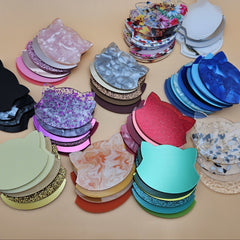
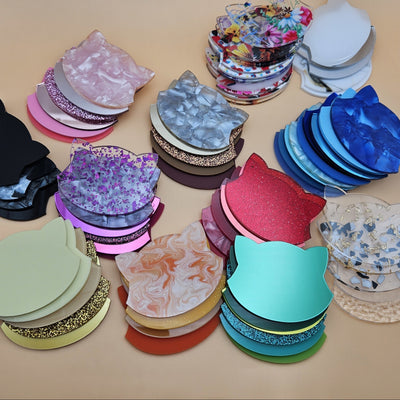
Q: My customers ask for custom shapes (cat-shaped, hexagonal, etc.). Worth offering? A: Yes, custom shapes are an upsell. They cost the same to cut as a basic oval but command 30 to 50 percent higher prices. Build a small library of stock custom shapes rather than running fully bespoke orders.
Q: Can I sell bag bases without a pattern? A: Yes, but kits with patterns outsell standalone bases. Even a one-page printed pattern is enough; offer it as a PDF download with each purchase.
Q: My bag bottoms still sag after a year. What is wrong? A: Either the base is too thin for the bag size and yarn weight, or the holes are too close to the edge so the leatherette tears slightly under load. Upgrade to 1.4 mm and inset the holes 7 to 10 mm from the edge.