

MAKE CAKE TOPPERS
Toppers that steal the table
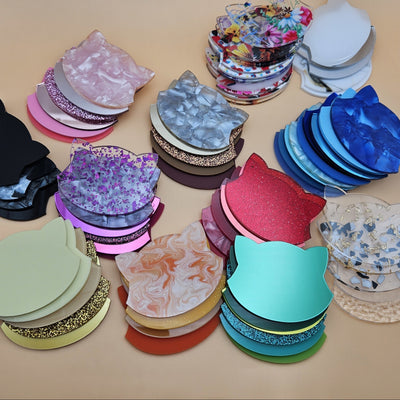
Mirror and glitter acrylic, the right fonts and fixings, a free design tool, and step-by-step guides. Everything you need to cut your first topper, or a hundred for the wedding season.
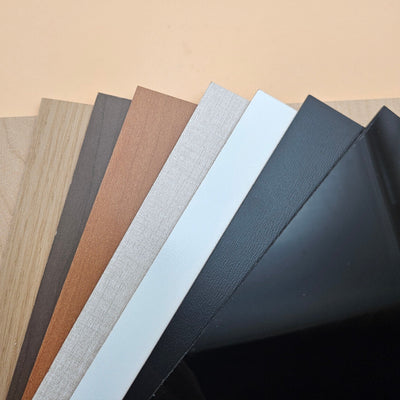
Choosing your cake topper material
Guides and Free Designs
MAKE IT UNIQUE
DISCOVER YOUR NEXT PROJECT



Multiline Single Layer Cake Topper

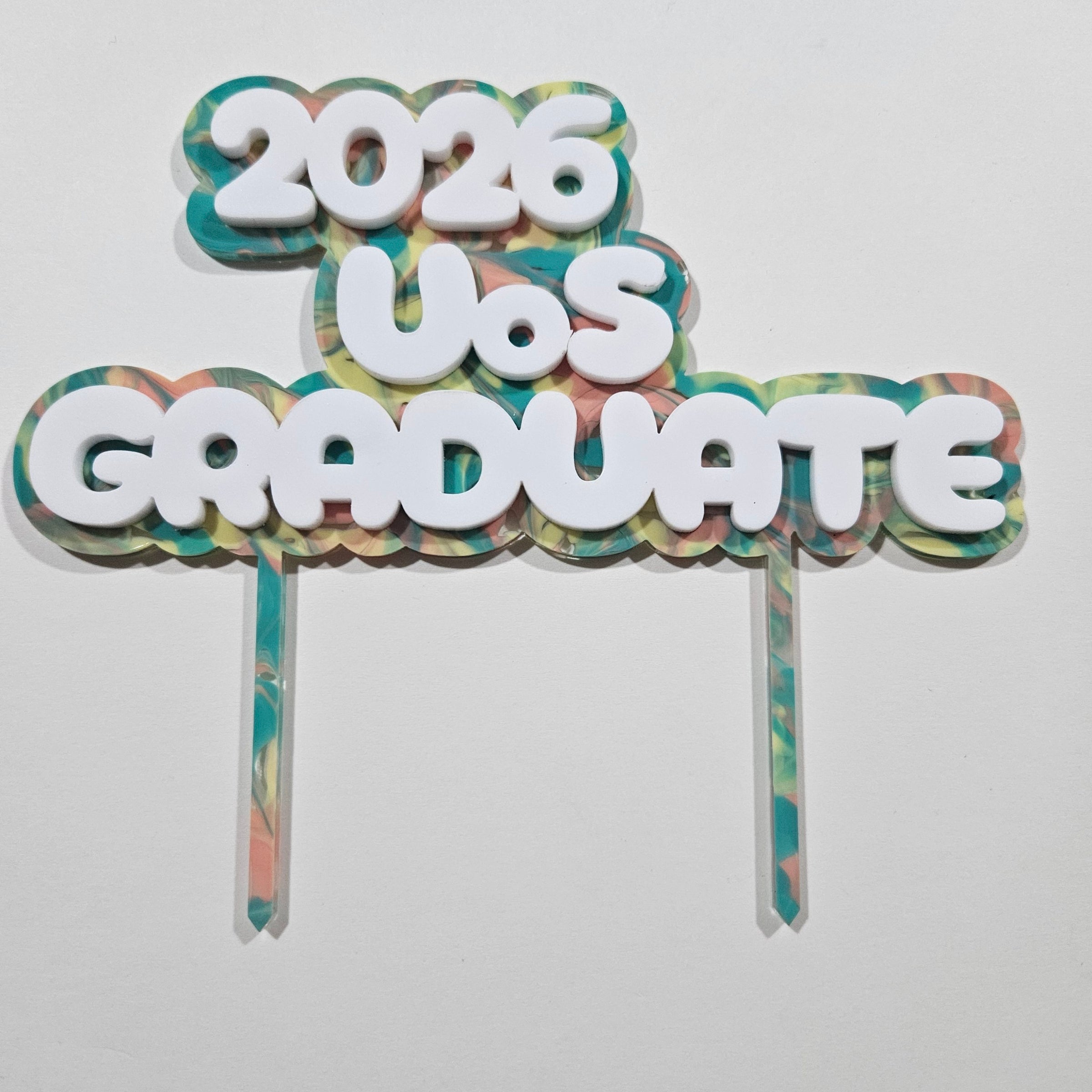
Layered Cake Topper - Two Stakes



Mirror Acrylic Sheet - Gold
Regular price
$16.00 CAD
Regular price
Sale price
$16.00 CAD
Mirror Acrylic Sheet - Silver
Regular price
$16.00 CAD
Regular price
Sale price
$16.00 CAD
Mirror Acrylic Sheet - Red - 2.6 mm
Regular price
$16.00 CAD
Regular price
Sale price
$16.00 CAD
Mirror Acrylic Sheet - Light Green - 2.6 mm
Regular price
$16.00 CAD
Regular price
Sale price
$16.00 CAD
Mirror Acrylic Sheet - 2-Way Mirror - See Through - 2.6 mm
Regular price
$16.00 CAD
Regular price
Sale price
$16.00 CAD
Mirror Acrylic Sheet - Light Blue - 2.6 mm
Regular price
$16.00 CAD
Regular price
Sale price
$16.00 CAD
Mirror Acrylic Sheet - Rose - 2.6 mm
Regular price
$16.00 CAD
Regular price
Sale price
$16.00 CAD
Mirror Acrylic Sheet - Purple - 2.6 mm
Regular price
$16.00 CAD
Regular price
Sale price
$16.00 CAD
Mirror Acrylic Sheet - Pink - 2.6 mm
Regular price
$16.00 CAD
Regular price
Sale price
$16.00 CAD
Mirror Acrylic Sheet - Blue - 2.6 mm
Regular price
$16.00 CAD
Regular price
Sale price
$16.00 CAD
Mirror Acrylic Sheet - Black - 2.6 mm
Regular price
$16.00 CAD
Regular price
Sale price
$16.00 CAD
Mirror Acrylic Bundle
Regular price
$120.00 CAD
Regular price
Sale price
$120.00 CAD

Acrylic Swatch Sets
Regular price
From $9.99 CAD
Regular price
Sale price
From $9.99 CAD

Glitter Acrylic Sheet - Gold
Regular price
$17.00 CAD
Regular price
Sale price
$17.00 CAD

Glitter Acrylic Sheet - Red
Regular price
$17.00 CAD
Regular price
Sale price
$17.00 CAD

Glitter Acrylic Sheet - Opaque Gold
Regular price
$17.00 CAD
Regular price
Sale price
$17.00 CAD

Glitter Acrylic Sheet - Silver
Regular price
$17.00 CAD
Regular price
Sale price
$17.00 CAD

Sold out
Glitter Acrylic Sheet - Black
Regular price
$17.00 CAD
Regular price
Sale price
$17.00 CAD
Sold out

Glitter Acrylic Sheet - Pink
Regular price
$17.00 CAD
Regular price
Sale price
$17.00 CAD

Glitter Acrylic Sheet - Iridescent Black
Regular price
$17.00 CAD
Regular price
Sale price
$17.00 CAD

Glitter Acrylic Sheet - Iridescent Gold
Regular price
$17.00 CAD
Regular price
Sale price
$17.00 CAD

Glitter Acrylic - Orange Sparkle
Regular price
$17.00 CAD
Regular price
Sale price
$17.00 CAD

Glitter Acrylic Sheet - Purple
Regular price
$17.00 CAD
Regular price
Sale price
$17.00 CAD

Glitter Acrylic Sheet - Iridescent Teal
Regular price
$17.00 CAD
Regular price
Sale price
$17.00 CAD


Dual-Finish Acrylic Sheet - Obsidian Black
Regular price
From $6.00 CAD
Regular price
Sale price
From $6.00 CAD
Dual-Finish Acrylic Sheet - Bright White
Regular price
From $6.00 CAD
Regular price
Sale price
From $6.00 CAD
Dual-Finish Cast Acrylic Sheet - Red Candy Apple
Regular price
From $6.00 CAD
Regular price
Sale price
From $6.00 CAD
Dual-Finish Pastel Acrylic Sheet - Pink Bubblegum
Regular price
From $6.00 CAD
Regular price
Sale price
From $6.00 CAD
Dual-Finish Pastel Acrylic Sheet - Blue Cotton Candy
Regular price
From $6.00 CAD
Regular price
Sale price
From $6.00 CAD
Dual-Finish Pastel Acrylic Sheet - Lavender Macaron
Regular price
From $6.00 CAD
Regular price
Sale price
From $6.00 CAD
Dual-Finish Cast Acrylic Sheet - Forest Green
Regular price
From $6.00 CAD
Regular price
Sale price
From $6.00 CAD
Dual-Finish Pastel Acrylic Sheet - Yellow Lemon Curd
Regular price
From $6.00 CAD
Regular price
Sale price
From $6.00 CAD
Dual-Finish Cast Acrylic Sheet - Orange Soda
Regular price
From $6.00 CAD
Regular price
Sale price
From $6.00 CAD
Dual-Finish Pastel Acrylic Sheet - Chocolate Beige
Regular price
From $6.00 CAD
Regular price
Sale price
From $6.00 CAD
Dual-Finish Pastel Acrylic Sheet - Dusty Rose Blush
Regular price
From $6.00 CAD
Regular price
Sale price
From $6.00 CAD
Dual-Finish Acrylic Sheet - Steel Grey
Regular price
From $6.00 CAD
Regular price
Sale price
From $6.00 CAD

Rawhide - Engraves Black - Leatherette Sheet – PU Material
Regular price
From $8.00 CAD
Regular price
Sale price
From $8.00 CAD

Tan - Engraves Black - Leatherette Sheet – PU Material
Regular price
From $8.00 CAD
Regular price
Sale price
From $8.00 CAD

Black - Engraves Silver - Leatherette Sheet – PU Material
Regular price
From $8.00 CAD
Regular price
Sale price
From $8.00 CAD

Carbon Fiber Black - Engraves Silver - Leatherette Sheet – PU Material
Regular price
From $8.00 CAD
Regular price
Sale price
From $8.00 CAD

Gray - Engraves Black - Leatherette Sheet – PU Material
Regular price
From $8.00 CAD
Regular price
Sale price
From $8.00 CAD

Olive Green - Engraves Black - Leatherette Sheet – PU Material
Regular price
From $8.00 CAD
Regular price
Sale price
From $8.00 CAD

Rustic - Engraves Gold - Leatherette Sheet – PU Material
Regular price
From $8.00 CAD
Regular price
Sale price
From $8.00 CAD

Bamboo - Engraves Black - Leatherette Sheet – PU Material
Regular price
From $8.00 CAD
Regular price
Sale price
From $8.00 CAD

Copper - Engraves Black - Leatherette Sheet – PU Material
Regular price
From $8.00 CAD
Regular price
Sale price
From $8.00 CAD

Black - Engraves Copper - Leatherette Sheet – PU Material
Regular price
From $8.00 CAD
Regular price
Sale price
From $8.00 CAD

Holographic - Engraves Black - Leatherette Sheet – PU Material
Regular price
From $8.00 CAD
Regular price
Sale price
From $8.00 CAD

Black - Engraves Gold - Leatherette Sheet – PU Material
Regular price
From $8.00 CAD
Regular price
Sale price
From $8.00 CAD

Glow-in-the-Dark - Engraves Black - Glossy Leatherette Sheet – PU Material
Regular price
From $8.00 CAD
Regular price
Sale price
From $8.00 CAD

Rawhide - Engraves Black - Glossy Leatherette Sheet – PU Material
Regular price
From $8.00 CAD
Regular price
Sale price
From $8.00 CAD

Rose - Engraves Black - Leatherette Sheet – PU Material
Regular price
From $8.00 CAD
Regular price
Sale price
From $8.00 CAD

Carbon Fiber Silver - Engraves Black - Leatherette Sheet – PU Material
Regular price
From $8.00 CAD
Regular price
Sale price
From $8.00 CAD

White - Engraves Black - Leatherette Sheet – PU Material
Regular price
From $8.00 CAD
Regular price
Sale price
From $8.00 CAD

Cork - Engraves Black - Leatherette Sheet – PU Material
Regular price
From $8.00 CAD
Regular price
Sale price
From $8.00 CAD

Carbon Fiber Red - Engraves Black - Leatherette Sheet – PU Material
Regular price
From $8.00 CAD
Regular price
Sale price
From $8.00 CAD

Sand - Engraves Black - Glossy Leatherette Sheet – PU Material
Regular price
From $8.00 CAD
Regular price
Sale price
From $8.00 CAD

Red - Engraves Black - Glossy Leatherette Sheet – PU Material
Regular price
From $8.00 CAD
Regular price
Sale price
From $8.00 CAD

Black - Engraves Red - Leatherette Sheet – PU Material
Regular price
From $8.00 CAD
Regular price
Sale price
From $8.00 CAD

Teal - Engraves Black - Leatherette Sheet – PU Material
Regular price
From $8.00 CAD
Regular price
Sale price
From $8.00 CAD

Hot Pink - Engraves Black - Leatherette Sheet – PU Material
Regular price
From $8.00 CAD
Regular price
Sale price
From $8.00 CAD


Two-Tone Engravable Acrylic - Matte Black - Engraves White
Regular price
From $7.00 CAD
Regular price
Sale price
From $7.00 CAD
Two-Tone Engravable Acrylic - White - Engraves Black
Regular price
From $7.00 CAD
Regular price
Sale price
From $7.00 CAD
Two-Tone Engravable Acrylic - Brushed Gold - Engraves Black
Regular price
From $7.00 CAD
Regular price
Sale price
From $7.00 CAD
Two-Tone Engravable Acrylic - Red - Engraves White
Regular price
From $7.00 CAD
Regular price
Sale price
From $7.00 CAD
Two-Tone Engravable Acrylic - Brushed Chrome - Engraves Black
Regular price
From $7.00 CAD
Regular price
Sale price
From $7.00 CAD
Two-Tone Engravable Acrylic - Stainless Steel - Engraves Black
Regular price
From $7.00 CAD
Regular price
Sale price
From $7.00 CAD
Two-Tone Engravable Acrylic - Yellow - Engraves Black
Regular price
From $7.00 CAD
Regular price
Sale price
From $7.00 CAD
Two-Tone Engravable Acrylic - Blue - Engraves White
Regular price
From $7.00 CAD
Regular price
Sale price
From $7.00 CAD
Two-Tone Engravable Acrylic - Gold - Engraves Black
Regular price
From $7.00 CAD
Regular price
Sale price
From $7.00 CAD
Two-Tone Engravable Acrylic - Gray - Engraves White
Regular price
From $7.00 CAD
Regular price
Sale price
From $7.00 CAD
Two-Tone Engravable Acrylic - Light Gray - Engraves Black
Regular price
From $7.00 CAD
Regular price
Sale price
From $7.00 CAD
Two-Tone Engravable Acrylic - Red - Engraves Black
Regular price
From $7.00 CAD
Regular price
Sale price
From $7.00 CAD
Two-Tone Engravable Acrylic - Light Gold - Engraves Black
Regular price
From $7.00 CAD
Regular price
Sale price
From $7.00 CAD
Two-Tone Engravable Acrylic - Green - Engraves White
Regular price
From $7.00 CAD
Regular price
Sale price
From $7.00 CAD
Two-Tone Engravable Acrylic - Dark Brown - Engraves White
Regular price
From $7.00 CAD
Regular price
Sale price
From $7.00 CAD
Two-Tone Engravable Acrylic - Black - Engraves Yellow
Regular price
From $7.00 CAD
Regular price
Sale price
From $7.00 CAD
Two-Tone Engravable Acrylic - Deep Yellow - Engraves White
Regular price
From $7.00 CAD
Regular price
Sale price
From $7.00 CAD
Two-Tone Engravable Acrylic - Light Blue - Engraves White
Regular price
From $7.00 CAD
Regular price
Sale price
From $7.00 CAD
Two-Tone Engravable Acrylic - Orange - Engraves White
Regular price
From $7.00 CAD
Regular price
Sale price
From $7.00 CAD
Two-Tone Engravable Acrylic - Brushed Gold - Engraves White
Regular price
From $7.00 CAD
Regular price
Sale price
From $7.00 CAD
Two-Tone Engravable Acrylic - Dark Green - Engraves White
Regular price
From $7.00 CAD
Regular price
Sale price
From $7.00 CAD
Two-Tone Engravable Acrylic - Brushed Copper - Engraves Red
Regular price
From $7.00 CAD
Regular price
Sale price
From $7.00 CAD
Two-Tone Engravable Acrylic - Purple - Engraves White
Regular price
From $7.00 CAD
Regular price
Sale price
From $7.00 CAD
Two-Tone Engravable Acrylic - White - Engraves Red
Regular price
From $7.00 CAD
Regular price
Sale price
From $7.00 CAD
Cake Topper FAQ
-
Are YXE Creations Craft Hub acrylics food safe?
Treat all of them as not food safe. Some of our acrylic is labelled food safe by the manufacturer, but we are not comfortable confirming food contact, so we ask you to assume none of our materials are food safe. A cake topper sits in the surface of a cake, so this matters. See the next question for how to handle that safely.
-
How do I make a topper food safe if I am not sure about the material?
Keep the material out of direct contact with the cake. Wrap the part of the stake that goes into the cake with food wrap (cling film) before you insert it, or push the stake through a food-safe straw or cake pick and insert that. The decorative part of the topper stays above the surface, so only the wrapped or sleeved portion touches the food. When in doubt, wrap the stake.
-
What thickness should I use for cake toppers?
3mm (1/8 inch) is the standard. It is rigid enough to stand straight on a stake without bowing, and it laser cuts with a clean edge. Use 2mm for very small or delicate toppers where weight matters, and stay at 3mm for anything wide, tall, or cut from mirror acrylic.
-
What size should a cake topper be?
Match it to the tier it sits on. A topper should be no wider than the top tier of the cake. Name and script toppers are commonly 5 to 7 inches wide; smaller accent toppers run 2 to 4 inches. Taller designs read better on tiered cakes, shorter and wider on single-tier cakes. The free cake topper generator at mylasertools.com lets you size the design before you cut.
-
Should I use one stake or two?
One stake is fine for compact toppers up to about 5 inches wide. Go to two stakes for anything wider, top-heavy, or with thin connecting points between letters, since a single stake lets a wide topper pivot and lean. Two stakes also help on soft cakes like whipped cream or mousse where a single point can sink or rotate.
-
How long should the stake be?
Leave 2 to 3 inches of stake below the artwork so it seats firmly into the cake without the design touching the surface. For tall tiered cakes you can go longer for extra grip. Keep the artwork itself fully above the frosting line, and remember to wrap or sleeve the stake before it goes into the cake.
-
How much does an acrylic topper weigh, and will it sink?
Acrylic is light, so a 3mm topper rarely sinks into firm buttercream or fondant. Very soft surfaces like whipped cream, mousse, and naked cakes give less support, so use two stakes or a wider stake base to spread the load and keep the topper upright.
-
Which acrylic works best for cake toppers?
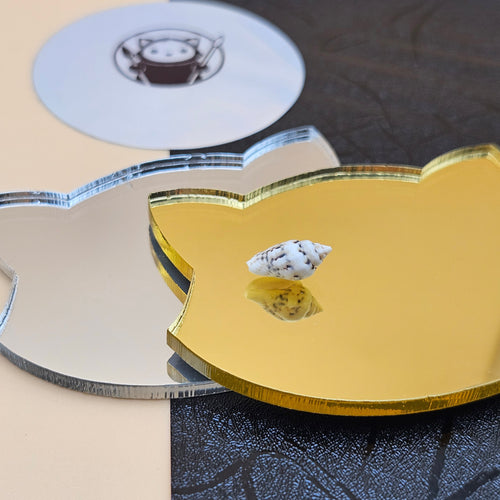
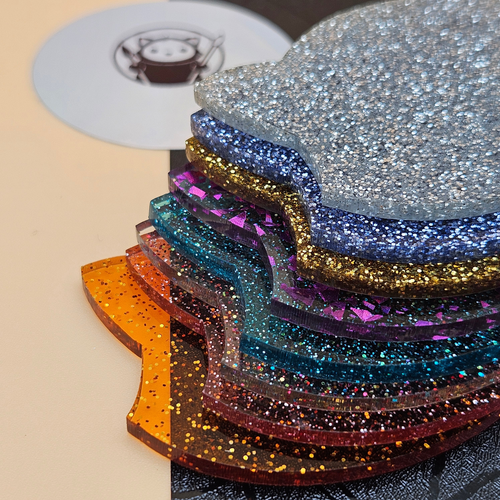
Cast acrylic is the workhorse for crisp letters and clean edges. Mirror acrylic gives that reflective gold or silver finish people associate with cake toppers; note that our mirror is extruded rather than cast, so it is sold separately. Glitter acrylic adds sparkle for celebration designs. Pick the finish to match the cake, and keep to 3mm for stability.
-
Can I reuse and clean a topper?
Yes. Acrylic toppers are reusable. Wipe with a soft, damp cloth and mild soap, and avoid the dishwasher, harsh solvents, and abrasive pads, which can haze or scratch the surface. Always use fresh food wrap on the stake each time you reuse a topper on a cake.